

Accident Reconstruction

Accident Reconstruction
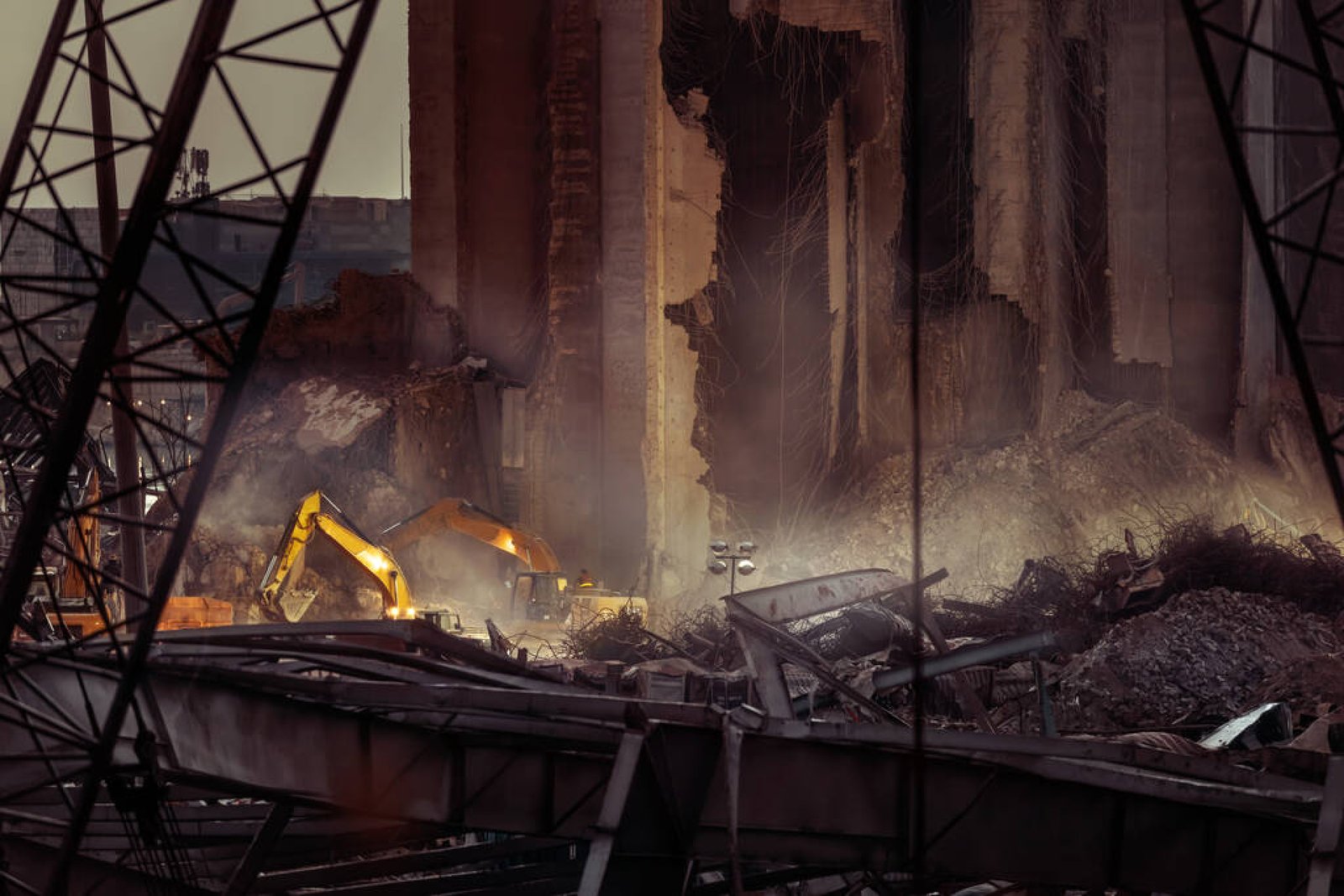
Accident Reconstruction is the highly specialized engineering and forensic discipline dedicated to investigating, analyzing, and mathematically modeling motor vehicle collisions, pedestrian strikes, and multi-vehicle highway crashes. When a catastrophic collision occurs, the immediate aftermath is frequently chaotic, filled with conflicting witness accounts, emotional testimonies, and damaged infrastructure. The primary mandate of a forensic accident reconstructionist is to look past subjective human interpretations and analyze the objective physical evidence—including tire skid marks, gouges in the asphalt, vehicle crush profiles, final resting positions, and Electronic Data Recorder (EDR) telemetry—to scientifically recreate the pre-collision, collision, and post-collision dynamics of the event.
The scientific methodology of accident reconstruction relies heavily on physics, mechanics, calculus, and momentum conservation laws. By evaluating the coefficient of friction between tires and road surfaces, measuring critical speed-from-skid equations, and conducting crush-energy analyses using specialized software, experts can calculate exact vehicle speeds prior to impact, determine pre-crash trajectories, establish driver reaction times, and evaluate whether a collision could have been avoided. In civil litigation, insurance fraud investigations, and criminal prosecutions involving vehicular manslaughter, an objective reconstruction report serves as the definitive analytical instrument used by judges and juries to assign liability and establish truth.
Aspire Forensics provides advanced, data-driven Accident Reconstruction in Noida. Our technical team integrates traditional physics-based calculations with modern computer simulation software and black-box data extraction to deliver comprehensive, unassailable collision assessments.
Clients searching for the best accident reconstruction services in Noida rely on our deep engineering expertise, precise metric mapping, and rigorous adherence to empirical validation standards. We ensure that every calculation is checked against physical laws and empirical testing data.
For legal practices, corporate fleet management teams, and insurance carriers requiring top accident reconstruction services in Greater Noida, our certified investigators provide expert witness support, forensic scale diagrams, and dynamic 3D simulations that clearly visualize how and why a crash occurred.
Core Scientific Principles and Physics of Crashes
Accident reconstruction is fundamentally an application of Newtonian mechanics. Every vehicle involved in a crash obeys strict laws of conservation of momentum and energy.
Conservation of Linear Momentum: In any collision where external forces (like braking friction) during the short impact interval are minimal compared to impact forces, the total momentum of the system before the crash equals the total momentum immediately after the crash. Reconstructionists vectoristically analyze the post-impact trajectories and final resting positions of the vehicles to trace backward, calculating the exact impact speeds and angles of approach for each participating vehicle.
Energy Conservation and Crush Analysis: The kinetic energy possessed by a moving vehicle prior to impact is dissipated during the crash through frictional work (skidding), rotational work (spinning), and structural deformation (crush damage). By measuring the depth and profile of structural vehicle crush and multiplying it against stiffness coefficients established by crash-test databases, experts calculate the amount of energy absorbed during impact, converting it directly into equivalent barrier speeds.
Investigation Workflow and Data Gathering
A thorough accident reconstruction follows a rigorous sequential investigation workflow:
- Scene Inspection & Surveying: Documenting road grade, curvature, skid marks, gouges, debris fields, and environmental lighting conditions using total stations and photogrammetry.
- Vehicle Examination: Inspecting mechanical components, steering linkages, braking systems, tire tread depths, and structural crush profiles for pre-existing failures or collision indicators.
- EDR ("Black Box") Extraction: Downloading electronic control module (ECM) data to record vehicle speed, throttle position, braking status, and delta-V metrics in the seconds preceding impact.
- mrow>Computer Simulation: Utilizing advanced modeling programs (such as PC-Crash or Virtual Crash) to simulate vehicle dynamics and validate physical calculations.
Key Areas of Crash Investigation
Speed & Skid Analysis
Calculating minimum travel speeds using tire friction coefficients, braking marks, and roadway geometry.
EDR Data Extraction
Downloading pre-crash telemetry from passenger cars and commercial trucks to verify driver inputs.
Pedestrian Impacts
Analyzing pedestrian throw distance, vehicle front-end contact points, and pedestrian gait dynamics.
Evidentiary Value in Civil and Criminal Law
In motor vehicle litigation, liability often hinges on fractions of a second or minor variations in speed estimations (e.g., whether a driver was speeding or had sufficient perception-reaction time to avoid a hazard). Mathematical accident reconstruction removes guesswork from these determinations, providing courts with empirical formulas and computer-generated models that establish culpability with high scientific precision. Aspire Forensics ensures all reports adhere strictly to accepted engineering standards.
Roadway Changes and Evidence Destruction
Roadway evidence is transient. Rain washes away fluid trails, passing traffic obliterates chalk markings, and road repair crews pave over asphalt gouges rapidly following an accident. Furthermore, vehicle salvage yards can inadvertently alter crush profiles during towing. Early deployment of a reconstruction team is critical to capturing transient physical traces before they are lost forever.
Frequently Asked Questions
-
1. Can you determine how fast a vehicle was traveling before a crash?
Yes. By analyzing skid mark lengths, road friction coefficients, vehicle weight, and post-impact throw distances using established physics formulas and EDR data, we can calculate speed with high accuracy.
-
2. What is a vehicle's Electronic Data Recorder (EDR)?
Commonly known as a "black box," an EDR is a module built into modern vehicles that records critical pre-crash operating data—including vehicle speed, braking application, steering angle, and seatbelt usage—during a collision event.
-
3. How do you account for weather and road conditions?
We test or calculate the specific drag factor (coefficient of friction) of the road surface considering factors like wet asphalt, gravel, ice, or grade slope using specialized accelerometer testing devices.
-
4. Are your accident reconstruction reports admissible in court?
Yes. Our investigations are conducted by certified engineers and reconstructionists using peer-reviewed methodologies, making them fully admissible as expert testimony in legal proceedings.
