

Fire & Arson Investigation

Forensic Fire & Arson Investigation
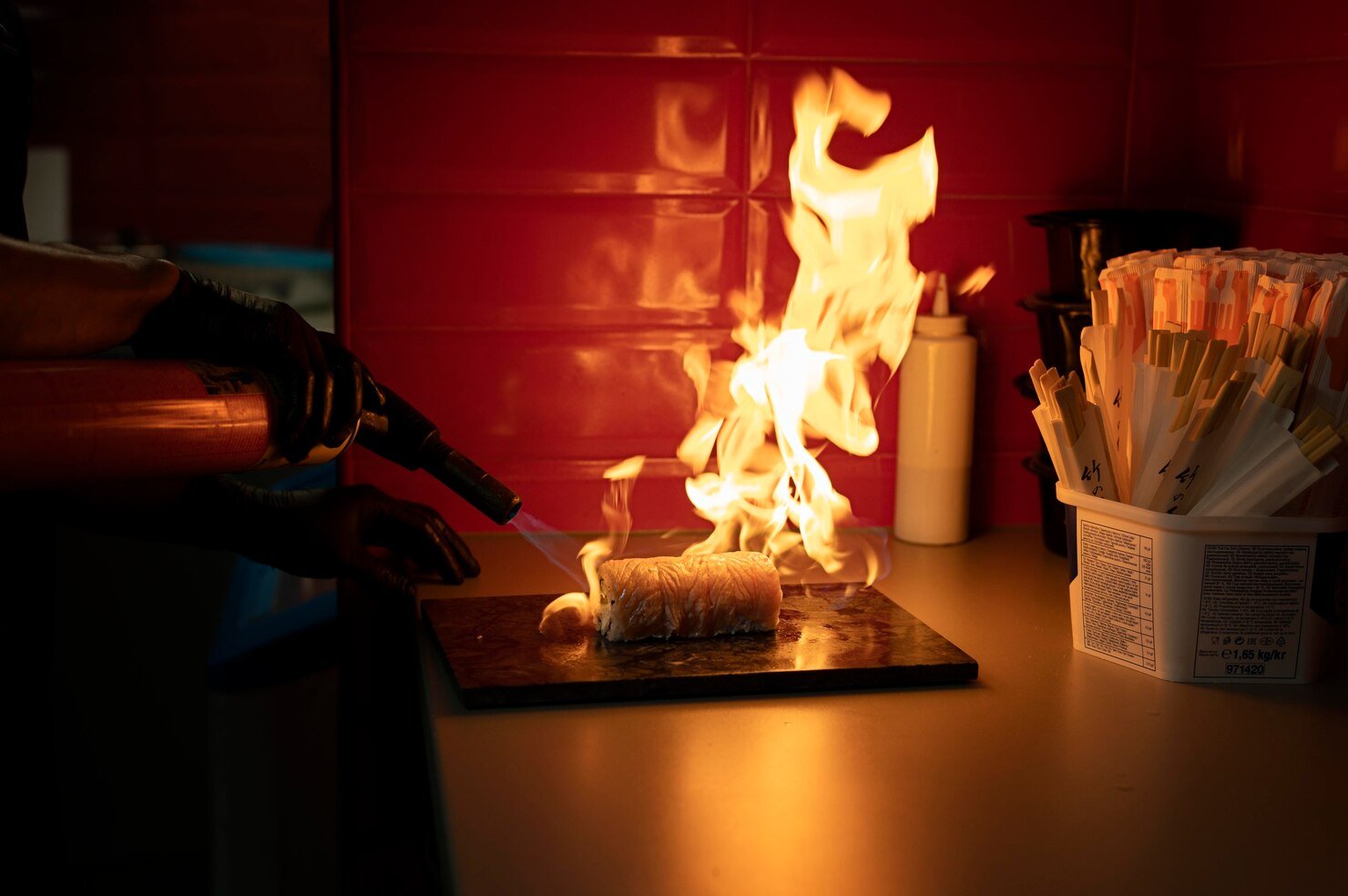
Forensic Fire and Arson Investigation is a critical forensic discipline dedicated to determining whether a fire was ignited through deliberate, malicious human action or resulted from natural or accidental circumstances. Arson is among the most destructive, dangerous, and challenging crimes to investigate. A skilled arsonist uses fire as an active weapon designed not only to destroy valuable property or commit homicide, but also to consume the physical evidence of the crime itself. Whether driven by insurance fraud, corporate sabotage, concealing secondary crimes (such as burglary or murder), personal revenge, or vandalism, incendiary fires cause catastrophic economic destruction and loss of life across industrial, commercial, and residential sectors.
The scientific investigation of suspected arson demands an uncompromising adherence to the scientific method, guided by NFPA 921 and forensic criminalistics standards. In legal proceedings, a fire cannot be declared arson merely because an investigator finds a scene suspicious, or because all accidental causes could not be immediately identified. Arson requires affirmative physical evidence of incendiary origin: multiple independent points of origin that cannot be linked by natural fire spread, distinct pour patterns (irregular puddle-shaped burn marks) on floors, chemical detection of petroleum accelerants via Gas Chromatography-Mass Spectrometry (GC-MS), discovery of incendiary timing devices or trailers, or tampered fire suppression systems.
Aspire Forensics delivers advanced and court-certified Fire & Arson Investigation in Noida. Operating with seasoned fire investigators, chemical analysts, and digital forensics specialists, we process suspected arson scenes across commercial warehouses, manufacturing plants, corporate offices, and private properties throughout Delhi-NCR and India.
Clients seeking the best fire and arson investigation services in Noida depend on our rapid deployment, unyielding objectivity, and complete evidentiary chain of custody. We ensure that fire debris samples, physical containers, and digital CCTV recordings are properly secured and analyzed under rigorous legal protocols.
For insurance fraud divisions, criminal defense counsels, law enforcement task forces, and corporate risk leaders requiring top arson investigation services in Greater Noida, our certified experts provide clear, court-defensible forensic reports and authoritative expert testimony that distinguish deliberate criminal sabotage from accidental fires with scientific certainty.
Scientific Indicators of Incendiary (Arson) Fires
Proving that a fire was intentionally set requires establishing specific physical and chemical anomalies that are inconsistent with natural, accidental fire propagation.
Multiple Independent Points of Origin: Accidental fires almost universally initiate at a single physical point of origin and spread outward in a continuous path. When an investigator uncovers two, three, or more distinct low-level points of origin separated by completely unburned flooring or walls—with no mechanism for convective or radiant heat transfer between them—the physical evidence conclusively proves human intervention. Arsonists frequently set multiple fires to overwhelm local fire suppression and ensure total destruction.
Liquid Accelerant Pour Patterns and Trailers: When liquid accelerants (such as petrol or diesel) are poured across a floor, the liquid pools in low spots, seeps into carpet pads, and flows along tile joints. As the liquid burns, it generates downward radiant heat that leaves irregular, curved, puddle-like boundaries on timber or concrete floors (pour patterns). Additionally, arsonists often lay "trailers"—lines of accelerant, rolled paper, or gunpowder connecting multiple rooms—to spread fire rapidly from one location to another.
Comprehensive Arson Investigation Methodology
Aspire Forensics executes an exhaustive, phase-driven investigative workflow designed to establish legal proof of incendiary intent:
- Scene Perimeter Securing & Witness Triage: Securing the fire scene immediately to prevent post-fire spoliation, documenting color of smoke and flame observed by initial responders, and preserving exterior footprints or forced entry marks.
- Systematic Origin Determination: Sifting through layered fire debris from areas of least damage toward deepest charring, examining clean burns and V-patterns to locate all independent ignition locations.
- Accelerant Detection & Photo-Ionization (PID) Screening: Using portable Photo-Ionization Detectors (PID) to sniff for volatile organic compound vapors along floor joints, baseboards, and drains to pinpoint optimal sample collection sites.
- Forensic Debris Collection: Collecting charred flooring, subfloor insulation, and baseboard samples into clean, unlined metal cans, sealed with tamper-evident tape under strict chain-of-custody protocols for laboratory GC-MS testing.
- Suppression System & Utility Tampering Audit: Inspecting fire sprinkler riser valves, smoke alarm batteries, and fire doors to verify whether safety systems were intentionally turned off or disabled prior to ignition.
- Digital Timeline & Inventory Cross-Verification: Correlating physical burn milestones with alarm server logs, CCTV hard drives, employee access card records, and business financial inventories to uncover fraud indicators.
Key Categories of Arson Investigations
Commercial Insurance Fraud
Investigating distressed businesses where stock is emptied before staged fires to collect multi-crore insurance payouts.
Crime Concealment
Analyzing fires intentionally set to destroy physical DNA, fingerprints, or documents associated with homicides, robberies, or corporate theft.
Vehicle Arson
Investigating intentionally burned passenger cars and commercial fleets in secluded areas to stage total-loss vehicle theft claims.
Criminal Prosecution and Admissibility in Indian Law
In Indian criminal jurisprudence, arson is prosecuted under severe provisions of the Bharatiya Nyaya Sanhita (BNS) covering mischief by fire or explosive substances with intent to destroy property or cause death. In civil insurance litigation, proving arson provides complete legal grounds for total claim repudiation and criminal referral. However, because arson carries heavy penalties, courts demand that incendiary origin be substantiated by empirical physical proof.
Aspire Forensics ensures that every arson case file meets rigorous judicial evidentiary standards. We present high-resolution photographic scales of pour patterns, laboratory GC-MS chromatograms proving the presence of specific accelerant chemistries, and structural arc-mapping logs that eliminate accidental electrical sources. Our certified experts deliver authoritative, objective testimony that clarifies complex fire chemistry for judges and public prosecutors.
Total Consumption and Post-Fire Overhaul Challenges
The primary challenge in arson investigation is the destructive nature of fire itself. If an incendiary fire burns completely through floor joists to full structural collapse, distinct floor pour patterns can be destroyed. Furthermore, aggressive firefighting overhaul—such as digging through floorboards with axes, tearing down ceilings, and flushing heavy water streams—can wash away liquid accelerant traces.
When physical floor patterns are compromised, our experts recover samples from protected areas such as underneath baseboards, between subfloor layers, or within soil beneath cracked concrete foundations where unburned liquid fuels frequently pool and survive.
Frequently Asked Questions
-
1. What is the strongest evidence of arson at a fire scene?
The strongest physical evidence includes multiple independent points of origin that cannot be linked by natural fire spread, distinct liquid pour patterns on floors, laboratory GC-MS detection of petroleum accelerants (like petrol or diesel), and discovery of physical trailers or delayed-timing devices.
-
2. Can a puddle-shaped burn pattern occur without an accelerant?
Yes. Irregular burn patterns can sometimes be produced by melting synthetic carpets, falling burning ceiling debris, or full-room flashover radiation. Because of this, modern forensic standards dictate that pour patterns alone cannot prove arson unless confirmed by laboratory chemical identification of an ignitable liquid residue.
-
3. How do investigators know if fire suppression systems were tampered with?
Investigators inspect main sprinkler shutoff control valves, water pressure gauges, alarm panel event history logs, and smoke detector batteries. In arson cases, perpetrators frequently chain shut water valves, remove backup generator batteries, or disable fire pump panels prior to setting the fire.
-
4. Are your arson investigation reports accepted in Indian High Courts?
Yes. Our investigations strictly follow NFPA 921 standards, maintain an unbroken chain of custody, and utilize accredited GC-MS chemical testing, making our forensic reports and expert testimonies fully admissible under the Bharatiya Sakshya Adhiniyam.
