

Insurance Investigation

Forensic Insurance Investigation Services
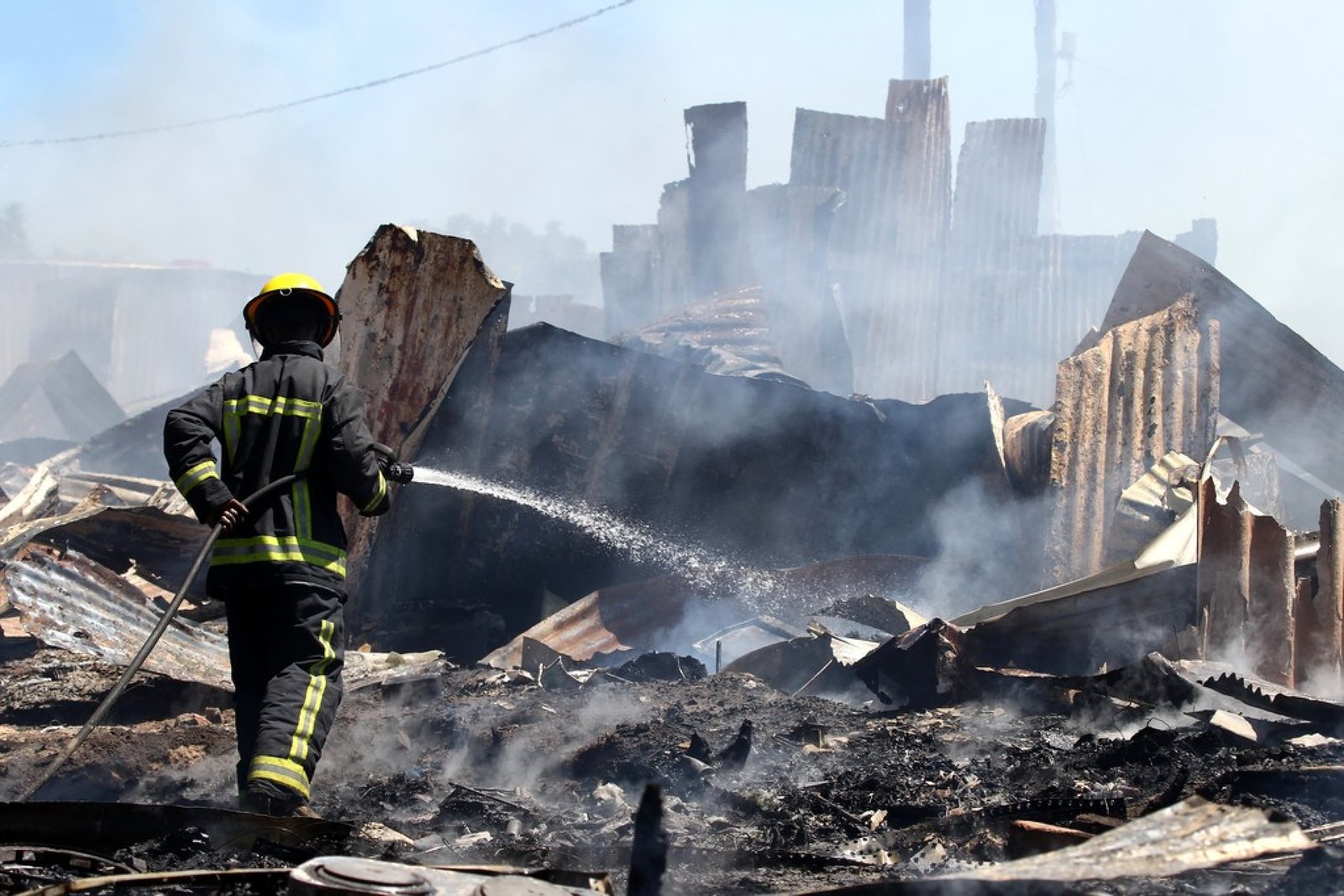
Forensic Insurance Investigation represents a crucial intersection between physical evidence examination, financial forensics, digital data analysis, and legal fact-finding. In an era where insurance claims have escalated in both frequency and sophistication, corporate insurers, underwriters, loss adjusters, and legal authorities face immense challenges in distinguishing authentic, accidental losses from premeditated, staged, or grossly inflated fraudulent claims. Insurance fraud is far from a victimless crime; it drains billions of rupees annually from legitimate economic systems, drives up policy premiums for honest consumers, and often conceals serious underlying criminal enterprises, ranging from commercial arson and staged motor accidents to falsified identity rings and organized cargo theft syndicates.
The primary mandate of a forensic insurance investigation is to establish empirical truth through objective, multi-layered scientific inquiry. While standard claims adjusters primarily assess policy terms and financial estimates, forensic investigators look beneath surface narratives to scrutinize the physical, chemical, and digital mechanics of the claimed loss incident. Whether examining a commercial warehouse gutted by an alleged accidental electrical fire, an expensive motor vehicle recovered with mysterious mechanical sabotage, or high-value transit cargo reported stolen under dubious circumstances, our certified investigators deploy scientific methodologies to reconstruct timelines, assess physical evidence feasibility, verify document authenticity, and uncover systemic discrepancies. Every conclusion is anchored in verifiable physical reality and strict legal standards rather than conjecture or assumption.
Aspire Forensics delivers advanced, multi-disciplinary Insurance Investigation in Noida. Our dedicated team comprises fire and explosion investigators, mechanical collision reconstructionists, document examination specialists, digital forensics analysts, and forensic accountants. Operating under rigorous chain-of-custody protocols, we assist national and private general insurance companies, third-party administrators (TPAs), corporate risk divisions, and legal counsels across Delhi-NCR and India in resolving high-exposure, complex, and contested claims.
Clients seeking the best insurance investigation services in Noida depend on our rapid field deployment, evidence-driven objectivity, and non-destructive examination standards. We ensure that physical crime scenes, burnt vehicles, collapsed structures, and questioned commercial paper trails are comprehensively evaluated and preserved to withstand intense legal challenges in civil consumer forums and criminal courtrooms.
For insurance claims managers, risk underwriters, and litigation attorneys requiring top insurance investigation services in Greater Noida, our certified practitioners provide transparent, comprehensive, and court-admissible forensic reports. We clearly articulate the scientific plausibility of claimed incident dynamics, identify fraudulent anomalies, and provide unassailable expert testimony that safeguards organizational assets from illegitimate liabilities.
Scientific Principles and Fraud Detection Frameworks
Modern forensic insurance claim evaluation is structured around empirical cross-verification, physical laws of nature, and behavioral fraud indicators. Fraudulent claims rarely collapse under a single clue; rather, they disintegrate when multiple independent scientific disciplines expose irreconcilable contradictions between the claimant’s narrative and the physical facts recorded on the ground.
Physical Feasibility and Causation Analysis: Every physical event—whether a fire, a mechanical component failure, or a vehicular collision—obeys strict thermodynamic, kinetic, and chemical laws. A fire cannot originate in a room without an ignition source possessing sufficient thermal energy to heat nearby fuels to their ignition temperature. Similarly, an engine cannot suffer catastrophic hydro-lock while driving on a dry highway. Forensic investigators analyze thermal patterns, metallurgy, fracture mechanics, and crush profiles to establish whether the reported sequence of events was physically possible under the claimed conditions.
Digital Footprints and Temporal Correlation: Modern insurance losses leave comprehensive digital audit trails. From telematics and Electronic Data Recorders (EDRs) embedded in motor vehicles to building management system (BMS) alarm logs, CCTV server archives, mobile cell-tower triangulations, and digital metadata on submitted invoices, digital evidence provides an unalterable chronological record. Forensic examiners synchronize physical damage milestones with digital timestamps, frequently exposing that a fire alarm was triggered hours after all staff departed, or that a vehicle was stationary when claimed to be traveling at high velocity.
Comprehensive Forensic Investigation Workflow
Aspire Forensics executes an exhaustive, phase-driven investigative workflow designed to preserve evidence, eliminate bias, and deliver legally defensible findings:
- Immediate Scene Securing & Evidence Preservation: Deploying directly to loss locations to establish secure perimeters, photograph undisturbed structural debris or vehicle damage, and prevent post-incident tampering or cleanup by interested parties.
- Origin, Cause, and Mechanism Examination: Analyzing physical burn vectors, arc mapping in electrical panels, crush dynamics on vehicles, or tool marks on breached entry points to reconstruct exact physical points of origin.
- Questioned Document & Invoicing Forensic Audit: Examining submitted repair bills, purchase invoices, and death/disability certificates under forensic spectral comparators to detect digital manipulation, rubber-stamp forgery, or ink line discrepancies.
- Digital Device & Telematics Interrogation: Extracting non-volatile memory from vehicle keys, Engine Control Modules (ECMs), mobile devices, and surveillance hard drives to corroborate chronological timelines.
- Witness & Claimant Forensic Interviewing: Conducting structured cognitive interviews with policyholders, employees, and first responders to evaluate narrative consistency against discovered physical artifacts.
- Comprehensive Forensic Reporting: Synthesizing physical, chemical, digital, and documentary findings into an exhaustive, peer-reviewed expert report detailing scientific conclusions, probability metrics, and photographic proof.
Key Categories of Insurance Claim Investigations
Commercial Property & Fire
Investigating suspected arson, exaggerated stock valuations, and fabricated machinery breakdown claims in industrial facilities.
Motor Vehicle Claims
Analyzing staged collisions, intentional vehicle fires, phantom pedestrian impacts, and fraudulent total-theft claims with key audits.
Document & Life Claims
Verifying authenticity of hospital records, death certificates, diagnostic scans, and high-value transit bills of lading.
Judicial Admissibility and Consumer Forum Defense
When an insurance company repudiates a substantial claim based on suspicion of fraud or policy condition breaches, the decision is almost universally contested in Consumer Disputes Redressal Commissions (District, State, or National Forums) or Commercial Civil Courts. In Indian jurisprudence under the Insurance Act, the Indian Contract Act, and the Bharatiya Sakshya Adhiniyam, the burden of proving fraud or intentional loss rests heavily on the insurer. Merely citing suspicion or circumstantial anomalies is insufficient; courts demand clear, cogent, and scientifically substantiated proof.
Aspire Forensics structures every insurance investigation case file to meet the highest standards of evidence admissibility. Our reports present detailed photographic scales, laboratory test chromatograms, metallurgical microscopic analyses, and verified digital hashes. Our certified experts appear as authoritative expert witnesses in consumer commissions and arbitrations, providing objective testimony that proves intentional sabotage, non-disclosure of material facts, or fabricated loss mechanics with scientific clarity.
Scene Spoliation and Temporal Challenges
The single greatest threat to a successful insurance investigation is spoliation of evidence—the premature destruction, cleanup, or alteration of the loss scene before a qualified forensic team can inspect it. When burnt property debris is bulldozed, when a damaged vehicle engine is dismantled by unauthorized mechanics, or when surveillance DVR hard drives are left to overwrite their recording loops, critical forensic evidence is permanently obliterated.
Our laboratory emphasizes immediate engagement and evidence preservation notices. By deploying rapidly upon claim notification, we secure volatile physical and digital evidence before environmental weathering, cleanup operations, or intentional tampering can compromise the integrity of the investigation.
Frequently Asked Questions
-
1. Why is a forensic investigator required instead of a standard insurance surveyor?
A surveyor primarily assesses policy terms, loss quantum, and repair costs. A forensic investigator conducts scientific analysis into the physical cause, origin, and authenticity of the loss—utilizing laboratory testing, metallurgical examination, digital telemetry, and document analysis to prove whether the loss was accidental, staged, or fraudulent.
-
2. How do you prove an industrial factory fire was deliberate arson?
We systematically examine burn vectors, heat lines, and low-level charring to locate multiple independent points of origin. We collect fire debris samples for Gas Chromatography-Mass Spectrometry (GC-MS) analysis to detect chemical accelerants, inspect electrical panels for arc mapping, and cross-reference inventory logs against actual physical residue volume.
-
3. Can you tell if a vehicle was intentionally burned by its owner?
Yes. Vehicle fires follow predictable spread patterns. We analyze whether the fire started in the passenger cabin without an electrical source, test interior upholstery for hydrocarbon accelerants, check for missing valuable components prior to burning, and extract key transponder memory to confirm vehicle access status.
-
4. Are your forensic insurance reports accepted in Indian Consumer Courts?
Yes. Our investigations strictly follow peer-reviewed scientific protocols and maintain rigorous chain-of-custody documentation, making them fully admissible and highly persuasive as expert scientific opinion under Indian evidence laws.
