

Crime Scene Investigation

Crime Scene Investigation
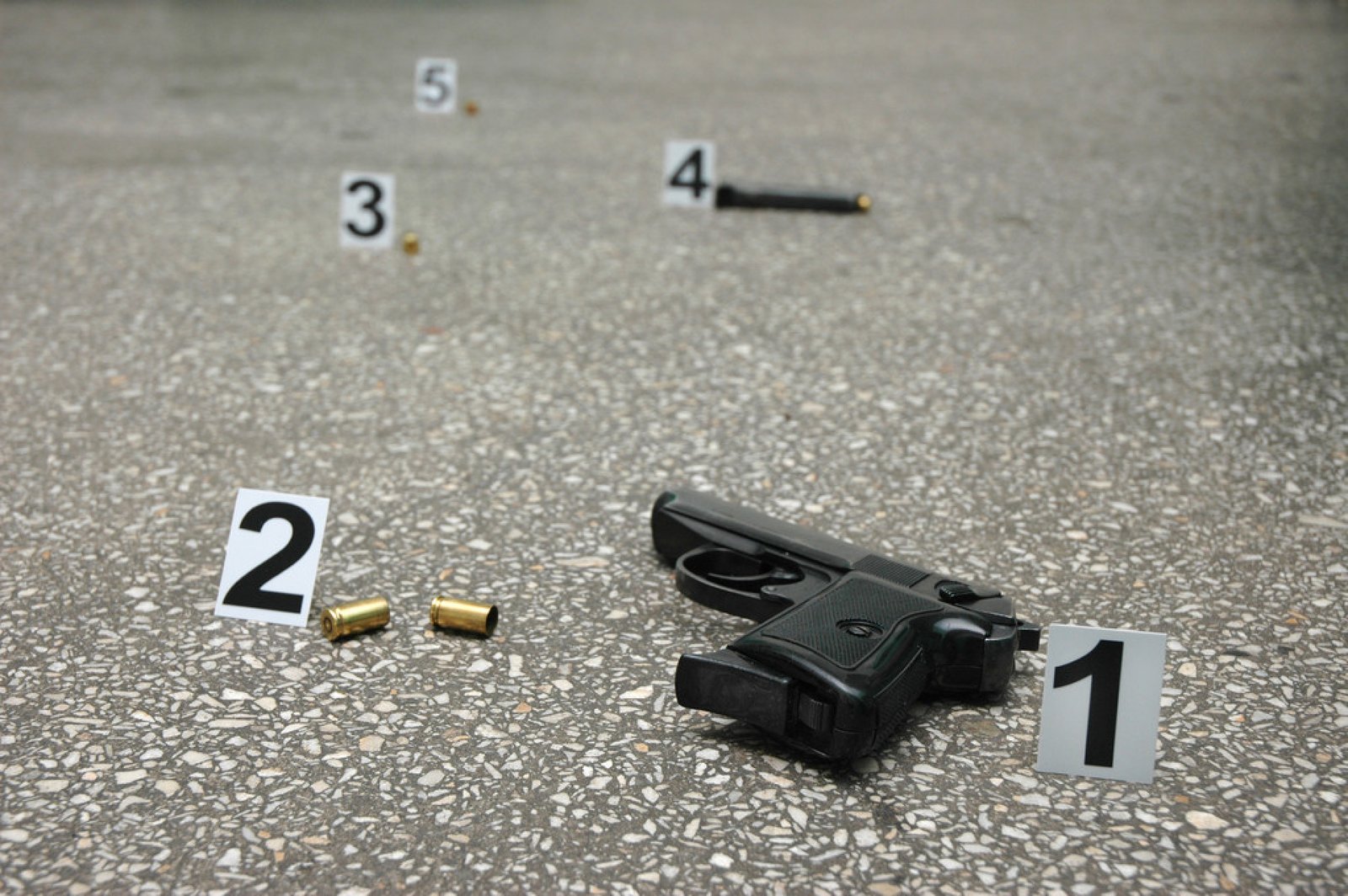
Crime Scene Investigation (CSI) is the meticulous, scientific process of recognizing, documenting, collecting, and preserving physical evidence from the location where a criminal act, accident, or suspicious incident has occurred. The primary objective of a crime scene investigator is to reconstruct the sequence of events objectively, identifying how, when, and by whom an incident took place based entirely on physical traces left behind. Because physical evidence—unlike human testimony—does not forget, become biased, or alter under pressure, a professionally managed crime scene investigation forms the unshakeable foundation of the entire judicial process. Every footstep, touch, or environmental disturbance can permanently alter a fragile landscape; therefore, adherence to strict scientific protocols during the initial response is paramount.
The scientific foundation of crime scene investigation is anchored in Edmond Locard’s Exchange Principle, which asserts that perpetrators leave fragments of themselves at a scene and take portions of the environment away with them upon departure. Uncovering these microscopic and macroscopic transfers requires multidisciplinary expertise. Investigators must seamlessly integrate principles of biology, chemistry, physics, and pattern analysis. From bloodstain pattern interpretation and latent fingerprint development to trajectory mapping and trace evidence recovery, every action taken at a crime scene must be defensible, repeatable, and documented with absolute precision through notes, scaled sketches, panoramic photography, and videography.
Aspire Forensics delivers world-class, rapid-response Crime Scene Investigation in Noida. Our field experts are equipped with state-of-the-art forensic collection toolkits, alternate light sources, electrostatic dust lifters, and advanced mapping technology. We deploy directly to scenes upon request to secure and process evidence before environmental contamination or degradation occurs.
Clients searching for the best crime scene investigation services in Noida rely on our uncompromising commitment to procedural integrity, airtight chain-of-custody maintenance, and objective reporting. We ensure that every piece of physical data is treated with the highest standard of scientific care.
For legal teams, insurance agencies, and law enforcement units requiring top crime scene investigation services in Greater Noida, our seasoned forensic specialists provide expert reconstruction services, independent scene reviews, and comprehensive court-admissible documentation to illuminate the truth of complex incidents.
Core Principles and Scene Management
Managing a crime scene successfully demands a disciplined, step-by-step methodology to prevent loss, alteration, or contamination of physical traces. The investigation follows a rigorous structural framework from the moment responders arrive.
Perimeter Control and Securing the Scene: The absolute first priority upon arrival is scene safety and the establishment of a wide security perimeter using barrier tape. Unauthorized personnel—including onlookers, media, and unassigned officials—must be strictly barred from entry. A single uncontrolled entry point can introduce foreign DNA, destroy footwear impressions, or compromise latent evidence. A chronological log of every person entering and exiting the perimeter is maintained meticulously.
Systematic Search Patterns: Once secured, investigators execute a systematic search pattern tailored to the geography of the location. Whether employing grid, spiral, strip (line), or quadrant (zone) searches, the objective is 100% coverage to ensure that no trace evidence—no matter how minute—is overlooked.
Documentation and Evidence Collection Workflow
Documentation precedes collection. Moving or touching an item before it is fully recorded destroys its spatial context forever. The documentation workflow encompasses four vital components:
- Note-Taking: Comprehensive, real-time logging of environmental conditions, lighting, times, personnel present, and initial observations.
- Photography & Videography: Capturing overall, mid-range, and close-up images with measurement scales before any item is disturbed.
- Sketching and Mapping: Creating scaled diagrams utilizing fixed triangulation and baseline coordinate measurements to map evidence positions.
- Packaging and Sealing: Utilizing appropriate containers (paper bags for biological items to prevent mold; rigid containers for sharp weapons) and sealing with tamper-evident tape bearing investigator signatures.
Key Specializations in Crime Scene Processing
Impression Recovery
Casting footwear impressions in mud or soil using dental stone and lifting latent dust prints via electrostatic lifters.
Bloodstain Pattern Analysis
Interpreting flight paths, impact angles, and spatter distribution to reconstruct violent physical struggles.
Latent Fingerprint Processing
Applying powders, chemical fuming, and optical lighting to uncover invisible ridge marks on surfaces.
Evidentiary Integrity and Judicial Weight
The legal viability of physical evidence depends entirely on how it was handled at the initial crime scene. An unbroken chain of custody ensures that items submitted to the laboratory are identical to those recovered from the scene. Defense attorneys frequently challenge sloppy scene processing; Aspire Forensics eliminates this vulnerability by enforcing rigid quality control, ensuring that all collection procedures stand up to aggressive judicial scrutiny.
Environmental Challenges and Scene Contamination
Outdoor crime scenes present severe challenges due to weather elements like rain, wind, and extreme heat, which can wash away biological fluids or dissolve chemical residues. Furthermore, chaotic first-responder reactions can inadvertently trample vital impression evidence. Rapid deployment and expert triage are critical to mitigating these environmental limitations.
Frequently Asked Questions
-
1. Why is securing the crime scene perimeter so crucial?
Securing the perimeter prevents unauthorized access, which can accidentally introduce foreign DNA, destroy footwear or tire impressions, move weapons, or contaminate delicate trace evidence before documentation occurs.
-
2. What is the chain of custody and why does it matter?
The chain of custody is a chronological paper trail documenting the seizure, custody, control, transfer, analysis, and disposition of evidence. It proves the integrity of the evidence in court, ensuring no tampering occurred.
-
3. How do investigators handle wet or bloodstained items?
Wet items are never sealed in plastic because trapped moisture causes mold growth and destroys DNA. They are air-dried in a controlled environment and packaged in breathable paper containers.
-
4. Can a crime scene be reconstructed long after it happened?
Yes. Through detailed crime scene photographs, scaled sketches, lab reports, and physical evidence re-examination, forensic experts can reconstruct the dynamics of an incident months or years later.
