

Vehicle Fire Examination

Forensic Vehicle Fire Examination
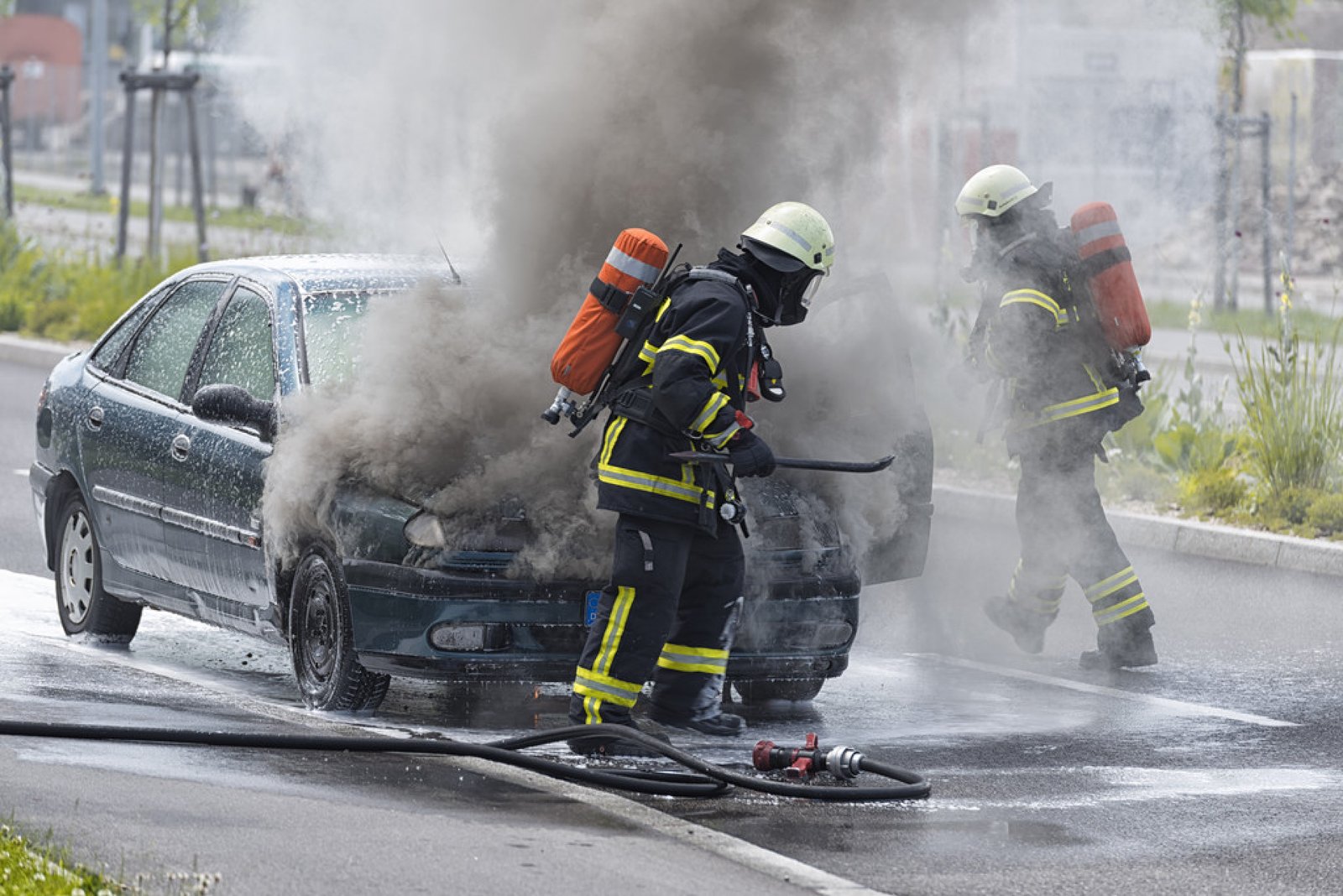
Vehicle Fire Examination is a highly complex, specialized forensic engineering discipline that investigates the origin, cause, and propagation dynamics of fires occurring in passenger cars, commercial transport trucks, buses, construction equipment, and electric vehicles (EVs). Modern automobiles are dense, interconnected environments containing high-energy electrical systems, flammable petroleum fuels, volatile synthetic materials, pressurized hydraulic fluids, and operating components that generate intense mechanical friction and thermal exhaust temperatures. When a vehicle is consumed by fire, the destruction is rapid and severe—temperatures frequently exceed 900°C to 1100°C within minutes, reducing complex wiring harnesses, plastic trim, and electronic control modules to an unrecognizable mass of melted alloy, brittle ash, and charred steel.
The primary objective of a forensic vehicle fire investigator is to decipher these post-burn physical artifacts to determine whether the fire originated from an unintentional mechanical breakdown, a factory manufacturing defect, improper aftermarket electrical accessory installation, poor maintenance, collision impact, or deliberate incendiary arson for insurance fraud. Unlike structural building fires, where rooms provide compartmentalization, motor vehicles feature open airflows, draft passages through heating ducts, and synthetic fuel loads packed within millimeters of hot exhaust manifolds and high-amperage 12V/48V/800V electrical wiring. Differentiating between a fire caused by an energized electrical short-circuit and one caused by liquid fuel spraying onto a turbocharger housing demands deep metallurgical expertise, electrical circuit arc mapping, and systematic fire vector analysis.
Aspire Forensics delivers advanced and scientifically validated Vehicle Fire Examination in Noida. Operating in strict accordance with internationally recognized standards, such as NFPA 921 (Guide for Fire and Explosion Investigations) and NFPA 1033 (Standard for Professional Qualifications for Fire Investigator), our engineering specialists process burned vehicles across workshops, accident yards, and open highway scenes throughout Delhi-NCR and nationwide.
Clients searching for the best vehicle fire examination services in Noida depend on our systematic, non-destructive methodology. We examine vehicles from regions of least damage to regions of greatest destruction, meticulously documenting burn lines, metal oxidation patterns, and wire terminations before collecting chemical samples or dismantling sensitive automotive components.
For automotive original equipment manufacturers (OEMs), insurance underwriters, forensic fire departments, and legal teams requiring top vehicle fire examination services in Greater Noida, our certified investigators deliver comprehensive, court-admissible forensic reports, complete microscopic analyses, and expert witness testimonies that withstand stringent judicial cross-examination.
Scientific Principles of Automotive Combustion and Spread
Investigating a vehicle fire requires understanding the thermodynamic fire tetrahedron (fuel, heat, oxygen, and uninhibited chemical chain reaction) within a dynamic vehicular environment. A fire cannot initiate unless a competent ignition source aligns spatially and temporally with an ignitable fuel package.
Fuel Classification and Thermal Thresholds: Motor vehicles contain diverse fuel sources, each with distinct flashpoints and auto-ignition temperatures. Gasoline vaporizes readily at ambient temperatures (flashpoint around -43°C), whereas diesel fuel requires pre-heating or atomization (flashpoint above 55°C). Engine lubricating oil, transmission fluid, and power steering fluids possess higher flashpoints (150°C to 230°C) but, when atomized under high pressure from a ruptured line, ignite vigorously upon contacting hot catalytic converters or exhaust manifolds operating between 400°C and 700°C. Interior passenger cabins contain polyurethane foams, polyester fabrics, and ABS plastics that burn with rapid heat release rates, driving rapid flashover throughout the cabin within two to three minutes.
Burn Pattern Dynamics and Metal Oxidation: Fire burns upward and outward, producing characteristic "V"-patterns, clean burn lines, and thermal oxidation gradients on steel body panels. Unpainted vehicle sheet metal oxidizes when subjected to sustained high temperatures; the color and depth of this surface oxidation (scaling) indicate the relative duration and intensity of heat exposure. By mapping these thermal gradients across the engine compartment, undercarriage, cabin, and trunk, investigators trace the progression of the fire backward to its precise physical area of origin.
Comprehensive Vehicle Fire Investigation Methodology
Aspire Forensics executes an exhaustive, phase-driven inspection workflow tailored to automotive fire scenes:
- Pre-Inspection Background Documentation: Gathering maintenance records, warranty claims, recall notices, fuel receipts, recent modification history (e.g., CNG retrofits, subwoofers, auxiliary lights), and detailed witness statements detailing initial smoke or flame locations.
- Exterior Systematic Examination: Documenting the vehicle exterior in a 360-degree circuit, recording tire burn patterns, paint blister lines, window glass breakage directions (inward vs. outward blowouts), and body panel warping.
- Engine Compartment Forensic Dissection: Systematically inspecting fluids (radiator coolant, brake fluid, engine oil levels), fuel delivery lines, injector rails, turbochargers, and exhaust manifolds for signs of localized spray fires, pinhole ruptures, or mechanical failures.
- Electrical System & Arc Mapping: Tracing the battery cables, fuse distribution boxes, alternator feeds, and cabin harnesses. Investigators utilize stereomicroscopy to differentiate between "cause" arcing (arcing that triggered the fire) and "victim" arcing (wiring insulation burned away by an external fire causing secondary short-circuits).
- Interior Cabin and Cargo Bed Inspection: Sifting through floor pan debris, seat spring tension loss, and dashboard framing to rule out arson accelerants, discarded smoking materials, or battery-operated devices left in the cabin.
- Chemical Debris & Hydrocarbon Sampling: Collecting carpet, seat foam, and floorboard residue samples into airtight metal containers under strict chain-of-custody protocols for Gas Chromatography-Mass Spectrometry (GC-MS) laboratory analysis.
Key Categories of Vehicle Fire Examinations
OEM Defect & Product Liability
Investigating purchased vehicles to determine if manufacturing flaws, line routing, or component defects caused fire losses.
Electric Vehicle (EV) Fires
Specialized investigation of Lithium-ion battery packs, thermal runaway events, BMS failures, and charging station faults.
Suspected Arson & Fraud
Detecting pour patterns, liquid accelerant residues, tampered fuel lines, and missing valuable parts in staged total-loss fires.
Courtroom Admissibility and Technical Defensibility
In automotive litigation—whether an insurance company defending against a fraudulent total-loss claim, an OEM facing a multi-million-rupee product liability lawsuit, or a criminal prosecution for arson—conclusions must be scientifically unshakeable. Mere speculation that a fire "must have been electrical" because the car burned completely is routinely thrown out of Indian consumer forums and civil courts.
Aspire Forensics grounds every vehicle fire report in the scientific method: formulating hypotheses, testing them against physical evidence, and systematically eliminating competing failure modes (such as ruling out mechanical friction before verifying electrical shorting). Our documentation includes macro-photographs of arc beads, cross-sectional micrographs of fractured fuel fittings, and certified laboratory hydrocarbon test reports. This rigorous standard provides complete legal defensibility for our corporate and judicial clients.
Total Consumption and Post-Fire Disturbance
When a vehicle fire is left to burn completely unchecked until all combustible materials are consumed down to raw steel, delicate copper wiring traces and fractured plastic fuel lines may be utterly obliterated. Furthermore, aggressive post-fire towing, stacking in salvage yards, and exposure to seasonal monsoon rains can wash away chemical accelerants and induce secondary corrosion on electrical contacts.
Our laboratory advises clients to secure burnt vehicles under protective shelters immediately upon occurrence. When evidence is heavily burned, we combine chassis physical analysis with non-volatile memory data extracted from the vehicle's key fob and remote telematics servers to evaluate vehicle state at the moment of ignition.
Frequently Asked Questions
-
1. Can you distinguish between an electrical fire and a mechanical fuel fire?
Yes. Electrical fires leave distinct microscopic melted round beads (eutectic or electrical arc beads) on copper wiring. Mechanical fuel fires leave low-level wash patterns, severe local thermal scaling on hot exhaust surfaces, and lack primary electrical short-circuiting signatures.
-
2. What causes fires in Electric Vehicles (EVs)?
Electric vehicle fires typically stem from internal thermal runaway in Lithium-ion battery cells, manufacturing defects in separator membranes, physical road debris impacts puncturing the battery enclosure, or electrical overcharging faults in the Battery Management System (BMS).
-
3. How do you know if an accelerant like petrol or kerosene was used to burn a car?
We collect unburned residue from protected areas such as carpet underlay, seat padding seams, and floor drain grommets into airtight containers. In the lab, Gas Chromatography-Mass Spectrometry (GC-MS) detects and identifies chemical petroleum hydrocarbon profiles with extreme sensitivity.
-
4. Is aftermarket accessory installation a common cause of vehicle fires?
Yes. Improperly wired subwoofers, high-intensity headlamps, central locking kits, and non-certified CNG/LPG conversions that bypass factory fuse ratings and route uninsulated wires over sharp chassis edges are among the leading causes of accidental vehicle fires.
