

Facial Image Editing

Forensic Facial Image Editing & Clarification
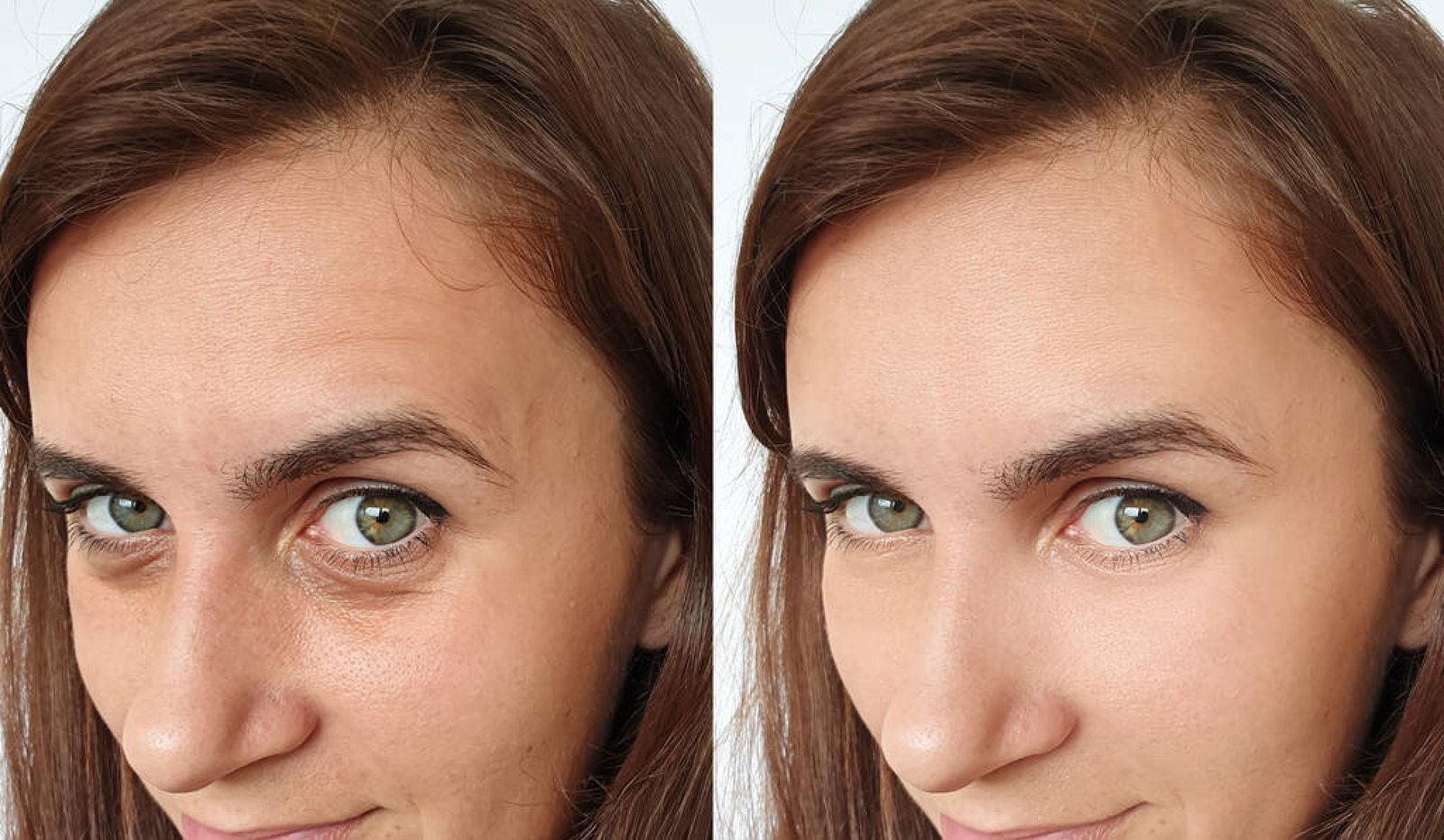
Forensic Facial Image Editing and Clarification is the scientific discipline dedicated to enhancing, restoring, isolating, and validating digital images of human faces recovered from evidentiary sources. In real-world criminal casework and civil disputes, visual surveillance exhibits are rarely captured under ideal photographic studio conditions. Instead, critical facial evidence frequently suffers from extreme environmental and digital degradation: intense shadows cast by baseball caps, blinding backlight from open doorways, motion blur from running suspects, heavy compression artifacts introduced by digital video recorders (DVRs), optical barrel distortion from wide-angle lenses, and physical occlusion from masks, clothing, or obstacles.
The fundamental mission of forensic facial image editing is to optimize the visual clarity of facial features while maintaining strict scientific authenticity and legal admissibility. Forensic editing is not artistic alteration or generative AI fabrication. While consumer software or commercial photo editors apply subjective filters, smooth away authentic skin details, or use generative machine learning to hallucinate plausible-looking pixels that never existed, forensic image processing relies strictly on mathematical algorithms, point-spread deconvolution, linear contrast adjustments, frame averaging, and color-channel isolation. Every adjustment is executed non-destructively on verified duplicate files, accompanied by an exhaustive audit trail that guarantees complete procedural repeatability in a court of law.
Aspire Forensics delivers advanced and court-certified Facial Image Editing in Noida. Operating in high-security digital forensics suites, our image processing specialists utilize validated forensic software packages, custom deconvolution filters, and mathematical matrix calculations to clarify facial features for suspect tracking, alibi verification, and courtroom demonstrative presentation.
Clients seeking the best facial image editing services in Noida depend on our uncompromising scientific integrity. We adhere to standards defined by the Scientific Working Group on Digital Evidence (SWGDE), ensuring that enhanced images reveal authentic underlying physical information without fabricating artificial details.
For law enforcement agencies, defense lawyers, and corporate litigators requiring top facial image clarification services in Greater Noida, our certified practitioners provide transparent, step-by-step audit logs, demonstrative comparison boards, and expert witness testimonies that defend image integrity under intense judicial scrutiny.
Scientific Principles of Image Processing vs. Generative Alteration
To preserve legal admissibility, forensic image clarification adheres to a clear scientific boundary: enhancement must extract existing latent data without generating synthetic information.
Mathematical Deconvolution and Clarification: When a camera captures motion blur (caused by a moving face or moving lens), the image sensor records a point of light smeared across a predictable trajectory. By calculating the mathematical Point Spread Function (PSF) representing this blur vector, forensic algorithms can apply inverse deconvolution filters that mathematically pull the scattered pixels back toward their original coordinate origins, restoring recognizable facial contours.
The Prohibition of Generative AI "Hallucination": Modern consumer AI photo tools use deep neural networks to "enhance" blurry images by predicting and drawing in completely synthetic details—such as adding realistic teeth, eyelashes, or skin pores that were never recorded by the physical camera sensor. In legal proceedings, introducing AI-hallucinated features represents evidence fabrication. Forensic specialists never use generative synthesis; we use linear mathematical processing to brighten shadows, sharpen existing edges, and correct optical geometry without introducing unrecorded data.
The Forensic Image Clarification Workflow
Forensic editing and enhancement follow an airtight, reproducible laboratory workflow:
- Evidence Acquisition & Cryptographic Hashing: Ingesting raw video streams or digital still files and calculating SHA-256 or MD5 cryptographic hashes. All enhancement work is executed exclusively on forensic bit-stream clones, leaving original media untouched.
- Optical Distortion Correction: Measuring lens barrel and pincushion distortion introduced by surveillance cameras, mathematically flattening the optical perspective to restore natural anatomical ratios.
- Dynamic Range & Luminance Optimization: Adjusting tonal curves, gamma levels, and local contrast to recover facial features obscured by deep shadows or severe backlighting.
- Frame Averaging (Temporal Integration): Aligning consecutive video frames across a video sequence and merging them. This statistical technique cancels out random digital sensor noise while reinforcing stable, underlying facial anatomical details.
- De-Interlacing & Aspect Ratio Correction: Recombining odd and even scan lines from legacy interlaced CCTV video formats to eliminate jagged horizontal motion comb artifacts.
- Comprehensive Audit Trail Generation: Documenting every software filter, parameter setting, formula, and mathematical matrix applied, ensuring any independent expert can replicate the exact enhancement results.
Core Applications of Facial Image Editing
Shadow & Glare Recovery
Penetrating dark shadow cast by caps or hoods and neutralizing intense headlights or backlighting obscuring facial features.
Motion Deblurring Analysis
Applying point-spread deconvolution algorithms to reverse motion blur caused by running suspects or moving vehicle cameras.
Occlusion & Disguise Analysis
Isolating and enhancing unmasked portions of a perpetrator's face, such as eye folds, forehead lines, and nose bridge.
Courtroom Admissibility and Expert Verification
Under Indian evidentiary law, introducing enhanced digital imagery requires establishing an unbroken chain of custody and demonstrating that the enhancement technique did not alter the substance of the evidence. Opposing counsel routinely challenges enhanced imagery by claiming the forensic examiner manipulated pixels to frame the defendant.
Aspire Forensics eliminates this risk by delivering comprehensive audit logs alongside every clarified image. Our reports present the raw original file with its cryptographic hash, side-by-side intermediate processing stages, and the final clarified output. Our forensic specialists provide expert witness testimony detailing the exact mathematical principles employed, proving to the court that the enhanced image represents pure, unadulterated physical truth.
The Physics of Missing Information (Information Theory)
In accordance with Claude Shannon’s Information Theory, once data is permanently lost due to extreme clipping (e.g., pure 100% white blowout with no RGB data), severe resolution starvation (a face represented by 5x5 pixels), or heavy lossy compression, it cannot be recovered scientifically.
True forensic practitioners recognize these physical boundaries. If an image is too degraded to support valid clarification, our laboratory will officially declare it "unsuitable for enhancement." Refusing to fabricate visual details when scientific information is absent is the true hallmark of authentic forensic integrity.
Frequently Asked Questions
-
1. Can forensic editing make a completely unrecognizable blurry face 100% clear?
No. Hollywood "enhance" tropes where a 10-pixel blur turns into a crystal-clear portrait are scientifically impossible. Forensic clarification optimizes and extracts existing pixel data; it cannot invent information that was never captured by the camera sensor.
-
2. What is the difference between forensic image editing and standard Photoshop editing?
Commercial Photoshop editing focuses on visual aesthetics, creative retouching, and altering reality. Forensic image editing utilizes mathematically validated, non-destructive algorithms supported by an audit trail to clarify existing details without altering evidentiary truth.
-
3. How do you prove an enhanced image was not tampered with?
We work exclusively on bit-stream forensic clones, keeping original files safe and hashed. Every filter, parameter setting, and enhancement step is recorded in a chronological audit log, allowing any opposing expert to replicate the exact results independently.
-
4. Are enhanced images accepted as valid evidence in Indian courts?
Yes. Clarified images accompanied by unbroken chain-of-custody certificates, hash verifications, and expert witness testimony explaining the scientific enhancement process are fully admissible in legal proceedings.
