

Forensic Photography & Videography

Forensic Photography & Videography
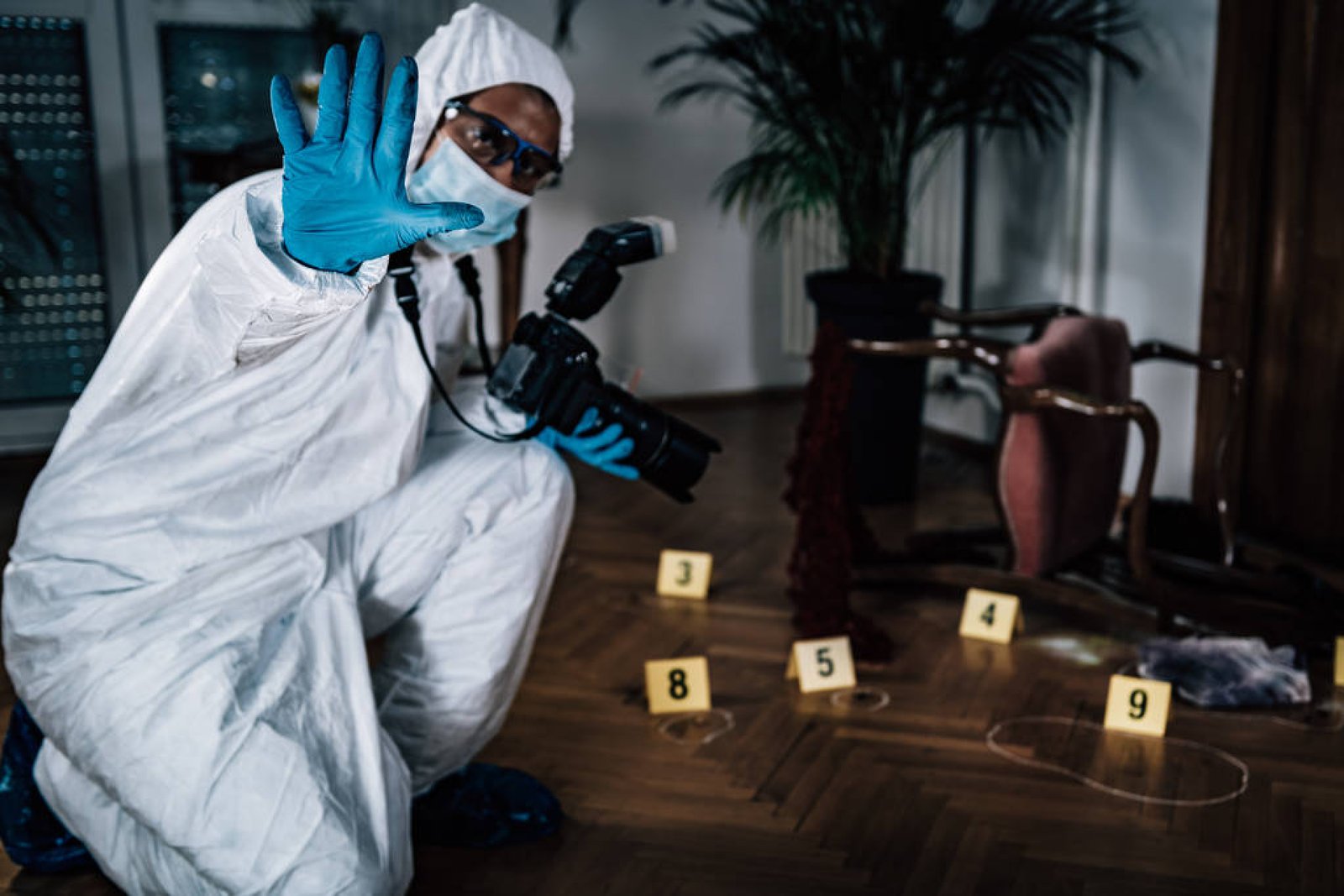
Forensic Photography and Videography constitute the primary visual recording discipline of forensic science, dedicated to capturing permanent, objective, and unbiased pictorial records of crime scenes, accident locations, physical evidence, and victims or suspects. A photograph or video acts as an unalterable witness that preserves a transient scene exactly as it appeared at the moment of discovery. Because crime scenes are dynamic and must be altered or cleaned following an investigation, visual documentation remains the sole medium through which judges, juries, and legal experts can step back in time to evaluate spatial layouts, bloodstain distributions, and positional relationships between objects.
The execution of forensic imaging requires specialized technical proficiency that transcends standard commercial photography. Forensic documentation adheres to strict compositional hierarchies—moving progressively from overall wide-angle views to mid-range relational shots, and finally to close-up macro photographs incorporating precise measurement scales. Furthermore, specialized lighting techniques, ultraviolet and infrared photography, polarization filters, and high-speed motion videography are deployed to reveal hidden impressions, latent bloodstains, or invisible gunshot residue patterns. Every digital file is preserved in raw format with unedited cryptographic hash signatures to protect against allegations of digital doctoring or manipulation.
Aspire Forensics provides premier Forensic Photography & Videography in Noida. Our technical experts are deployed with professional-grade digital imaging gear, specialized lighting rigs, and aerial drone capabilities to document complex scenes comprehensively from every conceivable angle.
Clients seeking the best forensic photography services in Noida rely on our uncompromising adherence to scale accuracy, lighting neutrality, and technical excellence. We guarantee that our visual records faithfully represent physical reality without optical distortion.
For legal teams and insurance investigators requiring top forensic videography services in Greater Noida, our certified visual documentation specialists provide courtroom-ready presentations, 3D scene walk-throughs, and objective visual exhibits that illuminate critical case details.
Scientific Principles and Photographic Hierarchies
Forensic photography is governed by the golden rule of documentation: capture the scene before anything is touched, moved, or altered. To achieve this, photographers follow a structured three-tier visual hierarchy.
1. Overall Shots: Wide-angle photographs designed to capture the general layout of the scene, its relationship to surrounding structures, entry and exit points, and geographical markers.
2. Mid-Range Shots: Photographs that establish the spatial relationship between individual pieces of evidence and fixed landmarks within the room or location.
3. Close-Up Shots: Macro photographs focused entirely on individual items of evidence. These shots must always be taken twice: first without a scale to show the raw item, and second with a certified L-scale or forensic ruler placed on the same plane to provide precise dimensional reference.
Advanced Imaging Techniques and Workflow
Standard lighting often fails to reveal faint or hidden evidence. Forensic imaging incorporates advanced optical methodologies:
- Oblique Lighting: Placing a light source at a shallow angle across a surface to cast shadows over low-relief impressions like shoe tracks or tool marks.
- Polarization: Utilizing polarizing filters to eliminate specular glare from shiny metallic, glass, or liquid surfaces.
- Alternate Light Photography: Capturing fluorescence emitted by biological stains when illuminated by specific UV or blue light frequencies.
- RAW File Integrity: Storing all images in proprietary camera RAW formats with locked metadata hashes to prove zero post-capture editing.
Core Specializations in Forensic Imaging
Scene Documentation for Crime Scenes
Executing systematic overall, mid-range, and close-up photographic logs of homicide, burglary, and accident scenes.
Injury & Trauma Imaging
Accurate, neutral photographic recording of victim or suspect injuries, contusions, and defensive wounds with scales.
Impression Macrography
High-resolution close-up recording of tool marks, bite marks, and footwear patterns for comparative lab analysis.
Admissibility and Visual Authenticity in Court
For a photograph or video to be admitted into evidence, a qualified witness must testify that the image is a fair and accurate representation of the scene as it existed at the time of recording. Altering contrast, cropping out background context, or using deceptive focal lengths can invalidate visual evidence. Aspire Forensics preserves the absolute integrity of every frame, ensuring complete legal admissibility.
Optical Distortion and Lighting Challenges
Two-dimensional photography inherently flattens three-dimensional spaces, occasionally distorting perceived distances between objects. Furthermore, extreme low-light environments or intense glare can obscure details. Forensic photographers mitigate these limitations by utilizing tripods, precise depth-of-field calculations, and supplemental balanced lighting rigs.
Frequently Asked Questions
-
1. Why must close-up photos of evidence be taken with a scale?
A certified scale (ruler) placed on the exact same plane as the evidence provides a definitive dimensional reference, allowing forensic experts to make accurate 1:1 life-size comparisons during subsequent laboratory analysis.
-
2. What is the difference between forensic photography and regular photography?
Regular photography focuses on artistic expression, lighting aesthetics, and emotional impact. Forensic photography is strictly technical, objective, and governed by strict standards of scale, lighting neutrality, and unedited preservation.
-
3. Why do forensic labs insist on storing images in RAW format?
RAW files capture uncompressed sensor data straight from the camera with unedited metadata, proving to the court that the images have not been digitally altered or manipulated using photo-editing software.
-
4. Can video replace still photography at a crime scene?
No. While video provides excellent spatial continuity and audio narration, still photographs offer superior resolution, sharpness, and controlled lighting required for close-up evidence analysis.
