

CCTV Forensics

CCTV Forensics
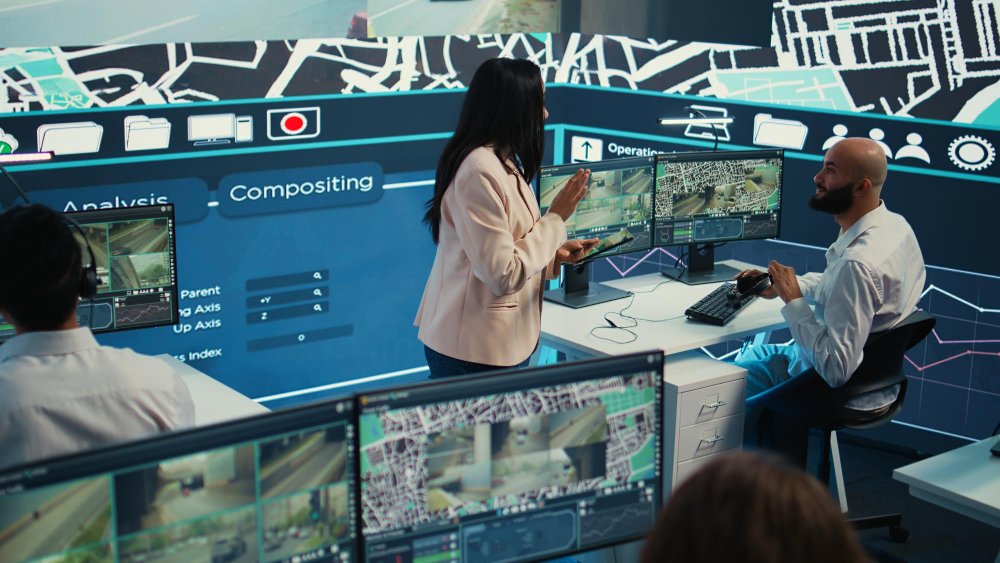
CCTV Forensics involves the scientific recovery, enhancement, and analysis of video footage captured by closed-circuit television systems (DVRs, NVRs, and IP cameras). The examination aims to clarify obscured details such as faces, license plates, and sequence of events for investigative purposes.
Video evidence is frequently hampered by poor lighting, low resolution, heavy compression, or proprietary video formats that standard players cannot open. A proper forensic examination utilizes advanced algorithms to extract the highest quality image possible without artificially altering the facts of the video.
Aspire Forensics provides CCTV Forensics in Noida for matters involving traffic accidents, workplace incidents, criminal activities, and property disputes. Our processing maintains a strict chain of custody and verifiable methodology.
Clients researching the best CCTV forensic services in Noida should consider the laboratory's ability to safely extract data from malfunctioning DVR hard drives and their capability to accurately convert proprietary codecs.
Similar requirements arise when seeking top CCTV forensic services in Greater Noida, especially where critical visual evidence needs authentication to rule out tampering or deepfake manipulation.
What CCTV Forensics Covers
CCTV forensics is concerned with both the secure extraction of the raw video data and the subsequent clarification of that imagery. The examination ensures that critical frames are isolated and enhanced legitimately.
The analysis may involve raw DVR hard drives, exported thumb drives, or cloud surveillance footage. The approach depends on the format and degradation level of the submitted material.
- Secure extraction from proprietary DVR/NVR file systems
- Video format conversion and native player playback
- Enhancement of dark or low-contrast footage
- Frame-by-frame analysis and timeline synchronization
- Clarification of moving targets (e.g., license plates)
- Highlighting, masking, and target tracking
- Authentication of footage to detect splicing or tampering
Video Material Used for Forensics
CCTV analysis involves different forms of visual evidence. Questioned material can include raw video files (.dav, .h264, .mp4), physical DVR recording units, or cell phone recordings of a monitor screen.
The best results are achieved when the original DVR or the natively exported file is provided. Screen recordings or heavily compressed WhatsApp videos significantly limit the forensic enhancement capabilities.
The submitted material must preserve the original compression and metadata. Converting files through standard video editing software before submission often destroys vital pixel information needed for clarification.
Areas of CCTV Forensics
Video Extraction
Bypassing corrupted or password-protected DVRs to recover overwritten or safely extract native video files.
Video Enhancement
Applying mathematical filters to clarify blur, adjust brightness, and stabilize shaky footage for better visibility.
Authentication
Analyzing metadata, hex code, and frame continuity to ensure the video has not been edited or manipulated.
Frame-by-Frame and Timeline Analysis
Surveillance footage is rarely recorded at full cinematic frame rates. Systems often record at 5 to 15 frames per second to save space, meaning fast-moving objects (like vehicles or swinging hands) may appear distorted or completely skip across the screen.
Frame-by-frame analysis slows down the event, isolating the exact millisecond where maximum detail is visible. Time-stamps multiplexed into the video are analyzed to calculate speed or synchronize multiple camera angles.
The examination focuses on factual pixels rather than artificial AI generation. Forensic enhancement clarifies what is actually there; it does not "guess" or generate missing details.
Compression and Artifact Characteristics
CCTV matching and enhancement involve examining the macroblocks and compression artifacts present within the video stream. Digital compression often creates "blocky" edges that can obscure faces or letters.
Individual frames are not considered in isolation if inter-frame averaging can be used. By stacking consecutive frames, random digital noise can be removed, revealing static background details more clearly.
Discrepancies in lighting, shadows, or unnatural pixel shifting are examined carefully to rule out video splicing or deliberate obfuscation of the event timeline.
Enhancement and Clarification Process
CCTV forensics begins with a non-destructive acquisition of the video. The proprietary file is then demultiplexed (separating audio, video, and timestamps) using specialized forensic software to prevent quality loss.
Relevant segments are isolated. Filters such as unsharp masking, contrast stretching, noise reduction, and de-interlacing are applied mathematically, and every step is recorded for repeatability.
A conclusion depends on the raw data available. Where the original recording simply does not contain enough pixels (e.g., a face is only 3x3 pixels wide), the result may remain unidentifiable, despite maximum enhancement.
CCTV Examination Procedure
The examination begins with a review of the submitted video format and an assessment of its native resolution and compression rate. A forensic working copy is created immediately.
Suitable areas of interest (a vehicle, a suspect, an object) are then examined. The examiner applies a sequence of clarification filters and compiles a detailed report of the methodology used.
Observations are documented visually through still images and annotated video clips. Any limitations arising from lens distortion, bad weather, or extreme distance are noted as factors affecting the final clarity.
Questions the Examination May Address
Depending on the footage available, CCTV forensic examination may assist in addressing questions such as:
- What is the alphanumeric sequence on a vehicle's license plate?
- What are the identifying features of an individual caught on camera?
- Has the video footage been altered, cut, or tampered with?
- What was the exact timeline and sequence of an accident or crime?
- Can footage from a damaged or password-locked DVR be recovered?
- What limitations affect the identification of objects in the video?
Quality of Video Evidence
The quality of the CCTV material has a direct, hard limit on the amount of clarification possible. A camera set to a high resolution (1080p or 4K) positioned closely provides far more pixel data than an analog camera recording in CIF resolution from 50 feet away.
Environmental factors such as glare, infrared blowout at night, motion blur, and dirt on the camera lens may permanently obscure details. These factors are considered when assessing the footage.
Digital compression (like high-ratio H.264) discards data to save hard drive space. Enlargement or "zooming in" does not create new information; it merely magnifies existing pixels and artifacts.
Proprietary DVR Files
Most CCTV systems do not record in standard MP4 or AVI formats. They use proprietary file systems designed for continuous loop recording.
Playing these files requires specific native players. Attempting to convert them using standard internet converters often drops frames or degrades the image quality.
Where an original DVR hard drive is available, forensic specialists can bypass the operating system to extract the raw datastreams directly, ensuring the highest possible quality for examination.
Video Findings and Limitations
CCTV findings depend strictly on the optical and digital quality of the recorded sequence. The examination relies on scientific enhancement, avoiding subjective interpretation of heavily degraded pixels.
The final output usually includes a clarified video segment, isolated frame stills, and a detailed timeline of events. If authentication was requested, the report will state whether anomalies suggesting manipulation were detected.
Limitations such as lack of resolution, severe motion blur, or overwriting of the DVR hard drive are explicitly documented to explain why certain details cannot be resolved.
When CCTV Forensics May Be Required
CCTV forensics is essential when surveillance footage is central to an investigation but the critical details are not immediately clear to the naked eye.
CCTV Forensics in Noida is frequently utilized in traffic collision analysis, verifying slip-and-fall claims, identifying perpetrators in thefts, and investigating workplace incidents. Similar needs arise for CCTV Forensics in Greater Noida.
Clients researching the best CCTV forensic services in Noida should ensure the forensic lab utilizes non-destructive tools and can provide an expert witness to validate the enhancement process in court.
Evidence-Based Video Analysis
Each video enhancement is performed under strict forensic principles. We only clarify existing pixel data and do not use generative AI to "fill in the blanks," as this invalidates the evidence.
Every filter applied (brightness, contrast, sharpening) is documented so the process can be perfectly replicated by an independent examiner.
For clients searching for the top CCTV forensic services in Greater Noida, this evidence-based methodology guarantees that the clarified footage accurately represents the true events and holds up under cross-examination.
Frequently Asked Questions
-
1. What is CCTV Forensics?
It is the scientific process of extracting, authenticating, and clarifying video and audio recordings from surveillance systems for use in investigations and legal proceedings.
-
2. Can you always read a blurry license plate?
Not always. We can clarify the image significantly, but if the camera was too far away or the resolution too low, the pixel data needed to read the plate simply may not exist.
-
3. How should I provide the video evidence?
The best method is providing the original DVR unit or exporting the video in its native format using a USB drive directly from the recording system. Avoid screen-recording with a phone.
-
4. Can you recover deleted CCTV footage?
If the DVR hard drive has not been overwritten by new recordings, we can often extract deleted or formatted video files using specialized forensic recovery tools.
-
5. Do you use AI to enhance the video?
No. Generative AI alters the evidence by creating pixels that were not originally there, rendering it inadmissible in court. We only use scientific mathematical filters to clarify existing data.
-
6. Can you prove a video has been edited?
Yes. Video authentication involves analyzing frame continuity, file structure, metadata, and pixel patterns to determine if footage has been spliced, trimmed, or deep-faked.
-
7. Are the enhanced videos acceptable in court?
Yes. Our enhancements are fully documented, repeatable, and non-destructive to the original file, making them completely compliant with court evidentiary standards.
