

Electrical Fire Investigation

Forensic Electrical Fire Investigation
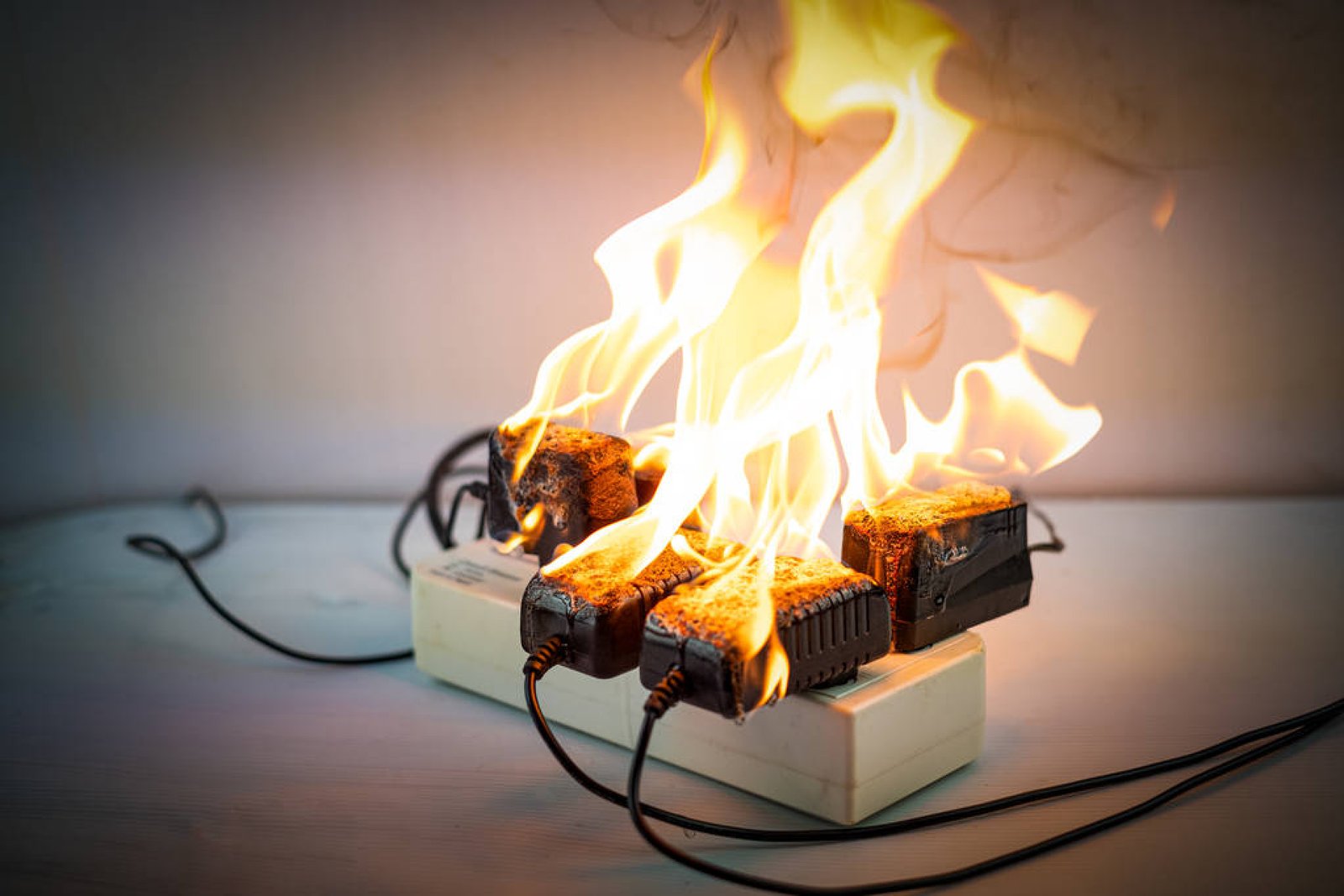
Forensic Electrical Fire Investigation is a vital sub-discipline of forensic electrical engineering dedicated to evaluating whether an electrical failure was the direct root cause of a fire or merely a victim of fire exposure. In residential dwellings, high-density commercial complexes, and industrial production plants, "electrical short-circuit" is the most frequently cited—and historically misdiagnosed—explanation recorded in preliminary incident reports. Whenever a fire scene reveals melted copper wiring, tripped circuit breakers, or blackened appliance cords, untrained personnel routinely declare the fire an electrical failure. However, in scientific reality, copper melts at approximately 1083°C—a temperature easily reached by general compartment fires fueled by ordinary plastics, timber, and synthetic furnishings.
The primary challenge for an electrical forensic investigator is distinguishing between "cause arcing" and "victim arcing." Did a localized internal electrical fault generate a high-temperature plasma arc that ejected white-hot molten copper droplets onto nearby combustibles to initiate the blaze? Or did an external fire ignited by an entirely different mechanism burn away the polyvinyl chloride (PVC) wire insulation, forcing energized conductors to come into direct physical contact and produce secondary short-circuits as victims of the advancing flames? Resolving this fundamental question requires an extensive understanding of electrical circuit theory, Ohm's and Joule's heating laws, metallurgy, stereomicroscopy, and spatial electrical arc mapping across building wiring systems.
Aspire Forensics delivers advanced, scientifically validated Electrical Fire Investigation in Noida. Our team includes forensic electrical engineers, metallurgical analysts, and certified fire investigators who evaluate power distribution panels, industrial switchgear, transformers, consumer appliances, and internal building wiring across Delhi-NCR and nationwide.
Clients searching for the best electrical fire investigation services in Noida depend on our empirical methodology. Operating under NFPA 921 guidelines, we do not guess based on superficial melting; we perform microscopic metallurgical evaluations and cross-sectional inspections to confirm true electrical arcing signatures, distinguishing them from ordinary external fire melting.
For property insurance carriers, electrical appliance manufacturers, commercial developers, and judicial authorities requiring top electrical fire investigation services in Greater Noida, our certified experts provide clear, court-admissible forensic engineering reports that establish absolute technical clarity in product liability and fire damage claims.
Scientific Principles of Electrical Fault Mechanics and Heating
An electrical circuit can only act as a competent ignition source if it generates thermal energy that exceeds the auto-ignition temperature of surrounding fuel packages under specific physical failure modes.
Joule Heating & Resistance Faults: According to Joule’s First Law ($Q = I^2 \times R \times t$), the heat generated in a conductor is proportional to the square of the electrical current ($I$), the resistance ($R$), and the duration ($t$). In an undamaged electrical system, resistance is negligible, and wiring operates coolly. However, improper terminations, loose screw lugs in distribution boards, or degraded terminal blocks introduce localized high electrical resistance. When heavy operational current flows through a loose contact, intense localized heating occurs—often exceeding 500°C to 800°C—glowing red-hot and igniting terminal plastic casings or adjacent wood framing without drawing enough overall amperage to trip standard overcurrent circuit breakers.
Arcing & Plasma Discharge: An electrical arc is an instantaneous, luminous discharge of electrical current across an ionized air gap between two conductors, generating localized plasma temperatures exceeding 3000°C to 6000°C. While an arc lasts only a fraction of a second before upstream protection devices clear the fault, it can instantaneously vaporize copper and ignite nearby combustible dust, flammable gases, or paper. Microscopic examination of wire ends reveals whether melting was produced by instantaneous internal electrical ionization (sharp boundaries, internal porosity, and smooth rounded arc beads) or by slow external furnace heating (gradual tapering, slag formation, and heavy surface oxide layers).
Electrical Arc Mapping and Laboratory Workflow
Comprehensive Forensic Electrical Methodology
Aspire Forensics executes an unyielding, standardized analytical sequence during every electrical fire investigation:
- Service Entrance & Main Panel Inspection: Examining the incoming utility supply, main switchgear, circuit breaker ratings, ground fault interrupters (RCDs/ELCBs), and trip indicators to verify overall electrical power status during the fire.
- Circuit Arc Mapping: Tracing branch circuits throughout the damaged structure and documenting every physical location where copper conductors exhibit electrical arcing. Plotting these arc locations on a building CAD schematic identifies the earliest energized circuits breached, systematically converging on the physical point of origin.
- High-Resistance Connection Auditing: Inspecting receptacle plugs, wall switches, junction boxes, and busbars for signs of localized "glowing connections," copper oxide melting, or annealed terminal spring clips.
- Appliance & Machinery Internal Dissection: X-raying and dismantling suspect appliances (refrigerators, HVAC units, industrial motors, water heaters) under laboratory cleanroom conditions to evaluate internal thermostat switches, run capacitors, and internal motor windings.
- Metallurgical Stereomicroscopy: Subjecting severed wire ends to high-magnification optical microscopy and cross-sectional metallographic polishing to differentiate true electrical arc beads from fire-melted copper blobs.
Key Categories of Electrical Failure Investigations
Panelboards & Switchgear
Investigating commercial distribution boards, busbar flashovers, undersized neutral lines, and circuit breaker mechanical binding failures.
Consumer Product Liability
Evaluating lithium-ion battery chargers, power strips, space heaters, and kitchen appliances for internal component manufacturing defects.
Industrial Motors & Transformers
Analyzing insulation breakdown in three-phase motors, dry-type transformer thermal runaway, and variable-frequency drive failures.
Subrogation, Product Liability, and Courtroom Proof
Proving or disproving an electrical root cause is the primary driver of subrogation recoveries in insurance litigation. If a multi-crore factory fire was initiated by a defectively manufactured power distribution board or a faulty consumer appliance, the property insurer can legally recover the entire paid loss from the negligent manufacturer or electrical contractor.
Conversely, if an insured party alleges that an accidental electrical short circuit destroyed their stock when circumstantial evidence points toward arson, objective electrical arc mapping provides decisive proof. If forensic arc mapping reveals that the electrical panel was de-energized or switched off long before the fire occurred, the claim of an "accidental electrical fire" is thoroughly refuted. Aspire Forensics ensures every technical finding is backed by metallurgical micrographs, electrical schematics, and load calculations that provide unshakeable credibility in judicial hearings.
Total Annealing and High-Temperature Destruction Boundaries
Forensic electrical examination faces physical challenges when fires burn unchecked for extended durations. In severe industrial fires fueled by chemical plastics or rubber, ambient temperatures can remain above 1100°C for hours. In such environments, copper conductors melt completely, dropping in liquid puddles to the floor and erasing delicate microscopic arc beads. Furthermore, structural collapse can physically snap conductors, producing mechanical tensile fractures that mimic thermal damage.
When physical conductor artifacts are compromised, our experts integrate electrical analysis with utility meter digital time-stamps, transformer telemetry, and circuit breaker trip histories to cross-verify whether electrical activity was present during the critical ignition window.
Frequently Asked Questions
-
1. How does a forensic expert tell if melted wire caused the fire or was melted by it?
An electrical arc creates an instantaneous, localized high-temperature plasma discharge that forms a round, distinct "arc bead" with an abrupt boundary between melted and unmelted copper. External fire heat produces gradual melting, tapering, and heavy surface oxidation across a large section of the wire without a distinct, localized arc bead.
-
2. What is "arc mapping" and how does it locate fire origin?
Arc mapping involves locating and charting all electrical short-circuits across building wiring. Because an electrical circuit can only arc if it is energized, wires will short out as an advancing fire burns through insulation. Mapping these arcs spatially on a floor plan points backward to the earliest circuit affected, leading investigators directly to the fire's origin.
-
3. Can a loose screw or poor electrical connection cause a fire without tripping the breaker?
Yes. A loose connection creates high electrical resistance, generating intense localized heat (Joule heating) that can reach 600°C to 800°C. Because the circuit is not drawing excess current (amperage), standard circuit breakers will not trip, allowing adjacent plastic casings or wooden framing to ignite undetected.
-
4. Are your electrical fire reports admissible in product liability lawsuits?
Yes. Our investigations are led by qualified forensic electrical engineers working in accordance with NFPA 921 standards, supported by laboratory stereomicroscopy and radiographic evidence, making our expert reports and testimonies fully admissible in commercial litigation and consumer forums.
