

Fire Origin & Root Cause

Fire Origin & Root Cause Analysis
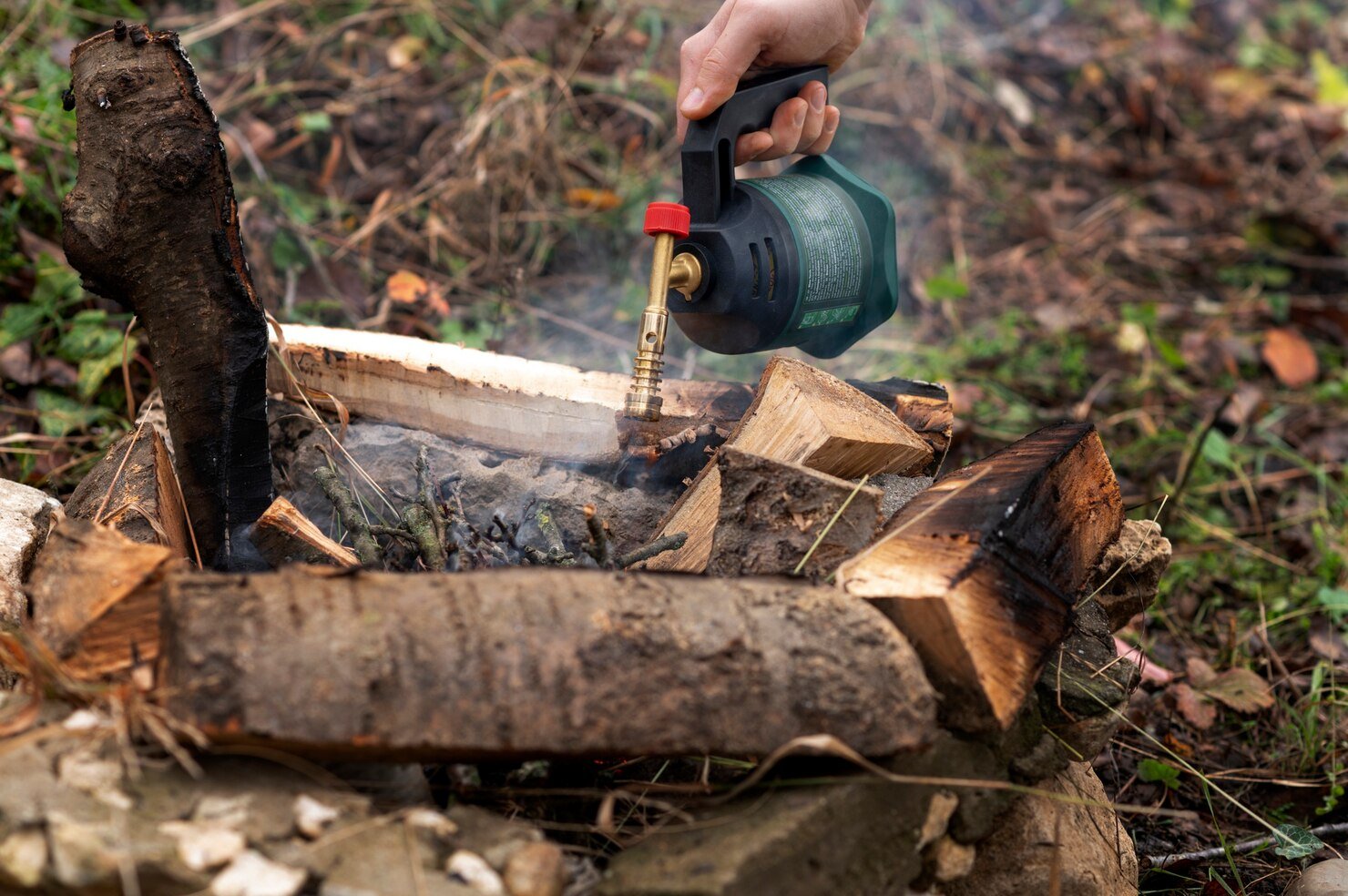
Fire Origin and Root Cause Investigation is the foundational core of modern forensic fire science. In every fire incident—whether engulfing an industrial petrochemical plant, a multi-story commercial showroom, a residential dwelling, or a motor vehicle—the central investigative question revolves around two distinct, interconnected milestones: First, identifying the exact physical three-dimensional point where the fire initiated (the Origin); and second, identifying the precise combination of fuel, ignition source, oxygen, and human or mechanical mechanisms that brought them together to sustain combustion (the Cause). Without definitively locating the origin, any conclusion regarding the cause remains scientifically invalid, speculative, and legally unviable.
Forensic origin and cause analysis is not an exercise in guesswork or intuitive assumption. The era of concluding that an unexplained blaze was "probably an electrical short circuit" simply because electrical wires were found melted has been thoroughly discredited by modern forensic science. Certified fire investigators operate under the rigorous framework of the scientific method, as codified by NFPA 921. The investigator gathers empirical data through meticulous physical inspection, analyzes heat and smoke vectors, develops competing scientific hypotheses, and methodically tests each hypothesis against discovered physical artifacts and natural laws. Competing potential ignition sources are systematically evaluated and eliminated through empirical verification until only the true, proven root cause remains substantiated.
Aspire Forensics delivers advanced, scientifically validated Fire Origin & Root Cause Investigation in Noida. Our dedicated forensic specialists combine engineering principles, chemistry, thermodynamics, and microscopic material analysis to unravel the most baffling, destructive, and high-exposure fire incidents across Delhi-NCR and nationwide.
Clients seeking the best fire origin and root cause services in Noida depend on our systematic, unbiased, and evidence-driven approach. We preserve and document fire scenes using high-resolution macro photography, 3D laser spatial mapping, and laboratory chemical extraction, ensuring that every hypothesis is verified through measurable physical proof.
For corporate risk directors, insurance underwriters, industrial plant executives, and legal counsels requiring top fire origin and root cause analysis in Greater Noida, our certified investigators deliver comprehensive, court-defensible forensic reports and expert witness testimonies that withstand the most rigorous legal scrutiny in civil litigations, criminal proceedings, and regulatory hearings.
Scientific Principles of Origin Determination and the Fire Tetrahedron
Determining the origin and cause of a fire requires an exhaustive understanding of combustion physics, thermodynamics, and the fundamental mechanics of fire propagation.
Origin Determination Mechanics: Fire spreads through convection, conduction, and radiation, moving outward and upward in search of fuel and ventilation. As fire travels away from its point of initial ignition, it produces characteristic burn patterns: V-patterns on vertical walls, inverted cone patterns, clean burns on non-combustible drywall where soot has burned away by intense local heat, and saddle burns on floor joists. Because the point of origin has typically been burning the longest, it frequently exhibits the lowest, deepest thermal consumption, the heaviest oxidation on structural metals, and the most advanced calcination of gypsum boards. Forensic experts trace these fire paths backward like arrows, converging on the precise geographical origin of the fire.
The Competent Ignition Source Requirement: Once the point of origin is isolated, the investigator must identify a competent ignition source. A competent ignition source must possess three vital physical characteristics: sufficient temperature (high enough to initiate combustion in the surrounding fuel), sufficient thermal energy (enough total heat quantity to sustain heating), and sufficient duration (long enough contact time to transfer heat to the fuel). If a suspected heat source lacks any of these three criteria, it cannot be deemed the root cause of the fire.
The Scientific Method Workflow in Origin & Cause Analysis
Aspire Forensics executes an unyielding, six-stage scientific methodology during every fire origin and root cause assignment:
- Problem Definition & Scope Identification: Establishing the physical boundaries of the loss scene, identifying stakeholders, verifying chain of custody, and securing the site against post-incident spoliation.
- Empirical Data Collection: Systematically examining the scene from exterior perimeters inward, capturing overall and macro photographs, mapping thermal gradients, interviewing first responders and witnesses, and reviewing utility logs.
- Data Analysis & Origin Localization: Evaluating fuel packages, ventilation vectors, structural failure lines, and arc-mapping electrical artifacts to identify the localized area of origin.
- Hypothesis Formulation: Developing all plausible, physical hypotheses regarding the ignition mechanism within the identified origin area (e.g., electrical fault, mechanical friction, chemical reaction, smoking materials, open flame, or incendiary accelerant).
- Hypothesis Testing & Cognitive Refutation: Systematically testing each hypothesis against empirical facts, laboratory results, and physical laws. Competing potential causes that lack physical evidence or fail thermodynamic feasibility testing are discarded.
- Root Cause Conclusion & Expert Reporting: Selecting the final, verified hypothesis that uniquely accounts for all physical evidence, and categorizing the fire classification as Accidental, Natural, Incendiary, or Undetermined in an exhaustive court-admissible report.
Key Categories of Root Cause Investigations
Electrical Root Causes
Identifying bearing seizure, hydraulic line atomization, friction heating, and industrial equipment thermal runaway mechanisms.
Mechanical & Industrial Failures
Identifying bearing seizure, hydraulic line atomization, friction heating, and equipment thermal runaway.
Chemical & Incendiary Origins
Analyzing spontaneous combustion in oily rags or agricultural stockpiles, and identifying poured liquid accelerant burn patterns.
Judicial Standards, Negative Corpus, and Admissibility
In legal proceedings, determining fire cause has profound civil liability and criminal consequences. Historically, some investigators practiced "Negative Corpus"—the improper process of concluding a fire was arson simply because no accidental electrical or mechanical cause could be found. Modern forensic science, reinforced by NFPA 921 and Indian evidentiary standards under the Bharatiya Sakshya Adhiniyam, strictly rejects Negative Corpus. An incendiary fire cannot be declared without affirmative, physical evidence of arson (such as physical trailers, multiple unlinked origins, or chemical accelerant residues).
Aspire Forensics adheres to absolute scientific objectivity. If extensive destruction or severe post-fire overhaul removes the physical evidence needed to definitively identify the exact heat source within the origin area, our experts have the integrity to classify the cause as "Undetermined" rather than rendering speculative opinions. This ethical, evidence-based discipline ensures that our positive conclusions possess unassailable credibility and judicial weight in court.
Severe Flashover and Total Destruction Boundaries
While scientific methodology is robust, severe full-room post-flashover burning and prolonged structural collapse present challenging forensic constraints. When a fire burns unchecked for many hours, secondary ventilation fires can create intense localized low-level charring in multiple rooms, mimicking points of origin. Furthermore, firefighters spraying high-pressure water streams can sweep away delicate light-bulb distortions, fuse fragments, and thin ash layers.
Our team mitigates these challenges by combining micro-excavation techniques with digital time-domain data. We cross-reference electrical arc mapping coordinates, building management alarm activation sequences, and surveillance video timestamps to narrow down the true timeline of origin with maximum scientific precision.
Frequently Asked Questions
-
1. What is the difference between fire origin and fire cause?
Fire origin is the exact physical, three-dimensional location (a specific room, equipment component, or coordinate) where a fire initiated. Fire cause is the specific mechanism—the combination of fuel, competent ignition source, oxygen, and circumstance—that brought them together to cause ignition.
-
2. Why can't a fire investigator simply guess the cause based on experience?
Guesswork or intuition is scientifically invalid and legally inadmissible. Fire dynamics are complex; post-flashover burning, ventilation paths, and fallen burning debris can create deceptive burn patterns. Conclusions must be derived through the scientific method, empirical testing, and physical proof.
-
3. What is a "competent ignition source"?
A competent ignition source is a heat source that possesses sufficient operating temperature, sufficient total thermal heat energy, and sufficient duration of contact to raise the temperature of the initial fuel package to its auto-ignition threshold.
-
4. What are the standard classifications of fire causes?
Under international standards, fire causes are officially classified into four categories: Accidental (unintentional equipment or human action), Natural (lightning, earthquakes), Incendiary (deliberate human ignition where arson is indicated), or Undetermined (insufficient physical proof to isolate a single cause).
