

Property Fire Examination

Forensic Property Fire Examination
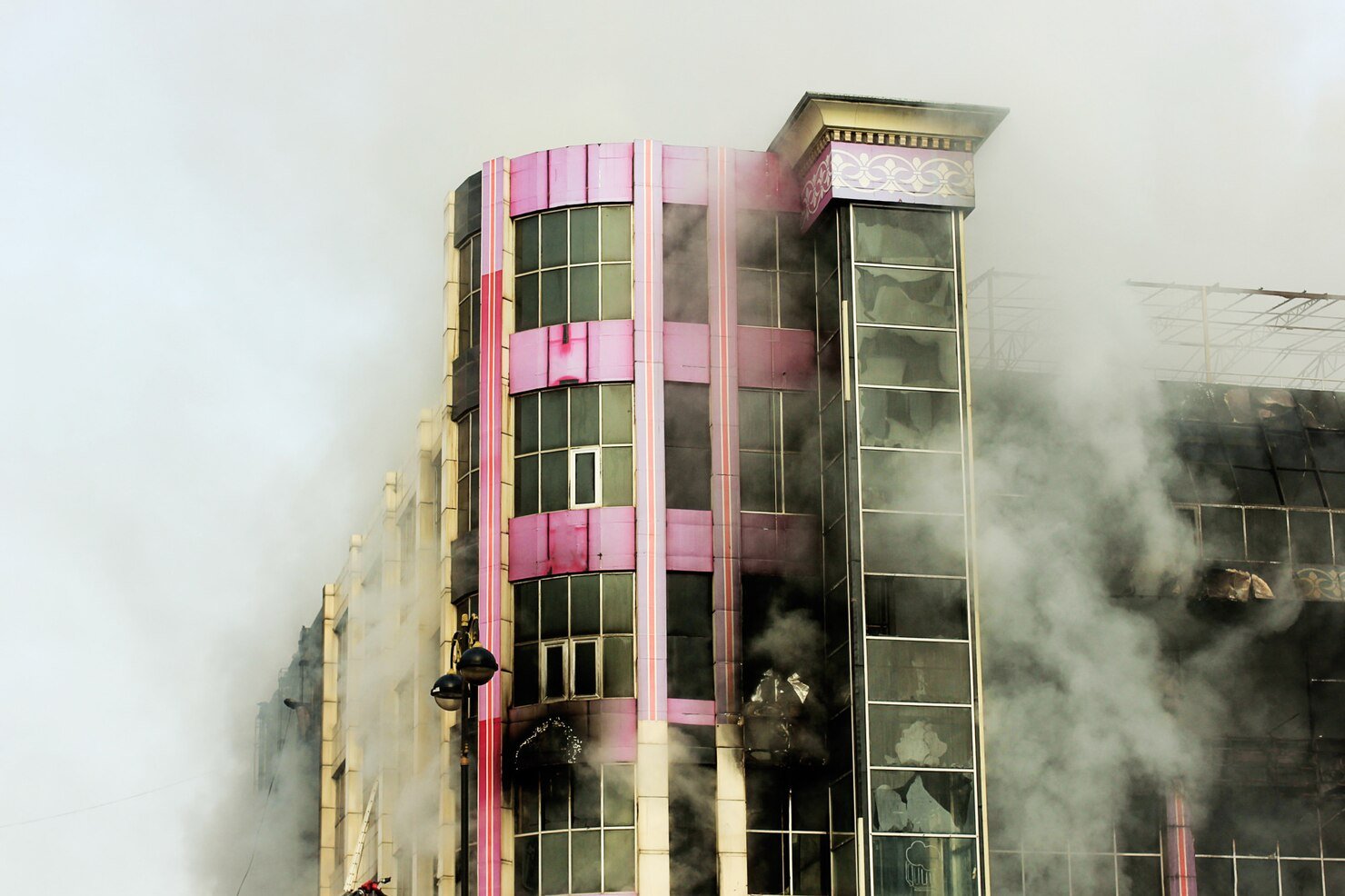
Forensic Property Fire Examination is an essential scientific engineering discipline dedicated to deciphering the complex origin, cause, propagation, and structural impact of fires occurring within residential residences, commercial complexes, industrial manufacturing plants, high-rise office towers, and storage warehouses. When a fire consumes a building, the resulting devastation is extensive and chaotic. Masonry walls collapse, roof trusses warp, electrical conduits fuse together into charred bundles, and heavy layers of soot and toxic debris blanket the floors. Amid this devastation, property owners, corporate insurers, municipal authorities, and legal entities require definitive answers: Did the disaster originate from an accidental mechanical or electrical failure, a building code non-compliance issue, catastrophic manufacturing equipment malfunction, or a premeditated act of commercial arson designed to facilitate insurance fraud?
The scientific foundation of structural fire examination is rooted in the systematic application of the scientific method, governed internationally by frameworks like NFPA 921 (Guide for Fire and Explosion Investigations) and NFPA 1033 (Standard for Professional Qualifications for Fire Investigator). Rather than jumping to conclusions based on superficial soot patterns or eyewitness speculation, certified forensic fire investigators conduct systematic deconstruction of the scene. They work methodically from areas of least destruction toward areas of deepest, low-level thermal damage. By analyzing subtle physical artifacts—including thermal stratification marks, structural deformation vectors, concrete spalling, charring depth gradients on timber framing, and electrical arc mapping across building distribution panels—forensic investigators reconstruct the exact physical narrative of how the fire initiated, developed, and spread throughout the structure.
Aspire Forensics delivers advanced, scientifically unassailable Property Fire Examination in Noida. Our multidisciplinary engineering and scientific teams combine extensive field experience with forensic laboratory testing capabilities. We deploy rapidly to industrial manufacturing zones, logistics hubs, and residential developments across Noida, Greater Noida, Yamuna Expressway, and the wider Delhi-NCR territory to secure fire loss perimeters before vital forensic traces are lost to site remediation or structural clearance.
Clients searching for the best property fire examination services in Noida depend on our uncompromising scientific integrity, advanced diagnostic instrumentation, and complete evidentiary traceability. We maintain strict non-destructive testing hierarchies, thoroughly documenting architectural artifacts, electrical panels, and utility runs through high-resolution photography and 3D laser scanning before physical sampling or destructive extraction takes place.
For property insurance adjusters, industrial risk managers, legal defense teams, and judicial authorities requiring top property fire examination services in Greater Noida, our certified investigators provide transparent, comprehensive, and court-admissible forensic reports. Our exhaustive evaluations establish objective fire dynamics, quantify structural thermal exposure, identify subrogation opportunities, and deliver authoritative expert witness testimony that withstands aggressive legal cross-examination.
Scientific Principles of Compartment Fire Dynamics
Understanding how a fire behaves inside a closed architectural structure requires an in-depth understanding of compartment fire thermodynamics, ventilation flow paths, and heat transfer mechanisms (conduction, convection, and radiation). A structural fire evolves through distinct, predictable stages that leave permanent, quantifiable imprints on building materials.
Fire Plume and Ceiling Jet Dynamics: When an ignition occurs within an enclosed room, the buoyant hot gases and smoke rise in a conical buoyant plume until reaching the ceiling. Upon contact with the horizontal barrier, the gases turn outward in all directions, forming a high-temperature ceiling jet. As this layer spreads, it radiates intense thermal energy downward, pre-heating furniture, flooring, and wall finishes throughout the room. If sufficient oxygen and fuel are present, the compartment undergoes "flashover"—a catastrophic transition occurring at roughly 500°C to 600°C where all exposed combustible surfaces ignite simultaneously. Forensic investigators must accurately identify whether low-level burn marks were produced by the initial point of origin or resulted from secondary radiant heating during full-room post-flashover burning.
Ventilation-Controlled Fire Behavior and Flow Paths: Modern structures are tightly insulated environments. Often, an energetic fire depletes available atmospheric oxygen inside a room, transitioning from a fuel-controlled fire to a ventilation-controlled, smoldering state. When a window fails due to thermal stress or an exterior door is opened by responding firefighters, fresh air rushes in along the floor while hot smoke rushes out along the ceiling. This unidirectional or bidirectional flow path creates pronounced low-level burn patterns, localized clean burns on non-combustible surfaces, and intense localized destruction that can easily be mistaken for an independent point of origin if the investigator lacks deep training in fluid flow dynamics.
Comprehensive Field Investigation Methodology
Aspire Forensics executes an exhaustive, phased investigation protocol designed to preserve evidence integrity and satisfy the highest judicial evidentiary standards:
- Exterior Perimeter & Structural Assessment: Evaluating exterior fire venting, smoke staining above windows, roof breaches, utility gas and electrical meter states, and overall structural stability to establish safe working zones.
- Low-Damage to High-Damage Deconstruction: Entering the structure through areas of minor smoke damage and systematically progressing room-by-room toward regions of severe structural consumption, documenting smoke horizon lines and thermal gradients along walls.
- Debris Layer Sifting and Reconstruction: Carefully excavating floor-level fire debris in layers ("reading the fire debris"), uncovering original floor coverings, identifying furniture remnants, and distinguishing between primary ignition points and fallen ceiling materials.
- Electrical Service Panel Arc Mapping: Tracing the entire building electrical distribution system, examining breakers, fuses, and conduits for localized arc melting (cause vs. victim arcing), and mapping electrical faults to establish a spatial timeline of circuit destruction.
- Appliance & Machinery Forensic Examination: Inspecting mechanical heating units, air conditioners, industrial motors, kitchen appliances, and manufacturing gear to evaluate internal component failures, bearing seizures, or thermal runaway.
- Accelerant Debris Collection: Collecting core floor samples, carpet backing, and baseboard porous residues into airtight unlined metal cans under strict chain-of-custody protocols for Gas Chromatography-Mass Spectrometry (GC-MS) laboratory analysis.
Key Categories of Property Fire Examinations
Industrial Plants & Factories
Investigating processing plants, chemical handling facilities, textile units, and boiler rooms for mechanical or electrical root causes.
Commercial Warehouses
Evaluating high-bay storage fires, racking collapse mechanisms, inventory loss validation, and automated sprinkler performance.
Residential Complexes
Investigating apartment fires, domestic electrical appliances, heating equipment, rooftop solar installations, and consumer product liability failures.
Subrogation, Liability, and Evidentiary Value in Court
Structural fire investigations carry immense legal and financial significance. For insurance carriers, establishing the true cause of a property fire dictates whether a multi-crore claim must be paid or repudiated due to policy exclusion breaches, intentional arson, or fraudulent stock inflation. Furthermore, identifying the precise origin and cause frequently unlocks significant subrogation opportunities—allowing insurers to recover paid losses from third-party manufacturers of defective electrical appliances, negligent electrical contractors, or neighboring properties that allowed uncontrolled fire spread.
Under Indian evidentiary law, including the Bharatiya Sakshya Adhiniyam, a property fire investigation report must demonstrate a defensible chain of scientific deduction. Mere opinion without empirical testing is vulnerable to exclusion during litigation. Aspire Forensics ensures every finding is reinforced by high-resolution photographic logs, CAD reconstruction drawings, metallurgical micrographs, and laboratory analytical certificates, providing corporate legal counsels and public tribunals with an unshakeable evidentiary foundation.
Total Consumption, Structural Collapse, and Suppression Spoliation
While scientific methodology is powerful, structural fire examination faces formidable physical challenges. When a property burns to complete structural collapse, falling concrete roof slabs and compromised masonry walls can crush delicate electrical wiring and bury points of origin beneath tons of rubble. Furthermore, aggressive firefighting operations—such as heavy hose stream hydraulic impact, mechanical ventilation tearing, and post-fire overhaul operations—can inadvertently displace critical physical artifacts or wash away volatile chemical accelerant residues.
Our laboratory emphasizes rapid notification and collaborative scene management. When physical artifacts are heavily disturbed, we cross-reference structural burn patterns with building management alarm logs, CCTV footage from neighboring properties, and eyewitness timeline testimonies to narrow down the origin area reliably.
Frequently Asked Questions
-
1. How does a forensic expert determine where a property fire started?
Investigators analyze physical burn patterns such as V-shaped patterns on walls, depth of wood charring, clean burns on masonry, concrete spalling, and electrical arc mapping. The investigation progresses systematically from areas of least damage toward the lowest, deepest point of thermal destruction.
-
2. What is the difference between cause arcing and victim arcing in electrical wiring?
"Cause arcing" occurs when an energized electrical wire suffers a primary short-circuit fault that generates high-temperature sparks, igniting surrounding materials. "Victim arcing" happens when an external fire from another source burns away the wire insulation, causing secondary electrical short-circuits. Forensic stereomicroscopy and arc mapping distinguish between the two.
-
3. Can fire investigations prove that an industrial warehouse fire was staged?
Yes. Discrepancies between claimed inventory and actual ash volume, discovery of multiple independent points of origin, identification of chemical accelerants, tampered fire suppression valves, and disabled CCTV recorder hard drives provide concrete physical evidence of staged or fraudulent fires.
-
4. Are your property fire examination reports accepted in Indian Consumer Forums and High Courts?
Yes. Our investigations adhere strictly to NFPA 921 standards, maintain an unbroken chain of custody, and provide objective scientific documentation, making our expert reports and testimonies fully admissible in commercial litigations and consumer dispute commissions.
