

Further Forensic Support

Specialized Further Forensic Support Services
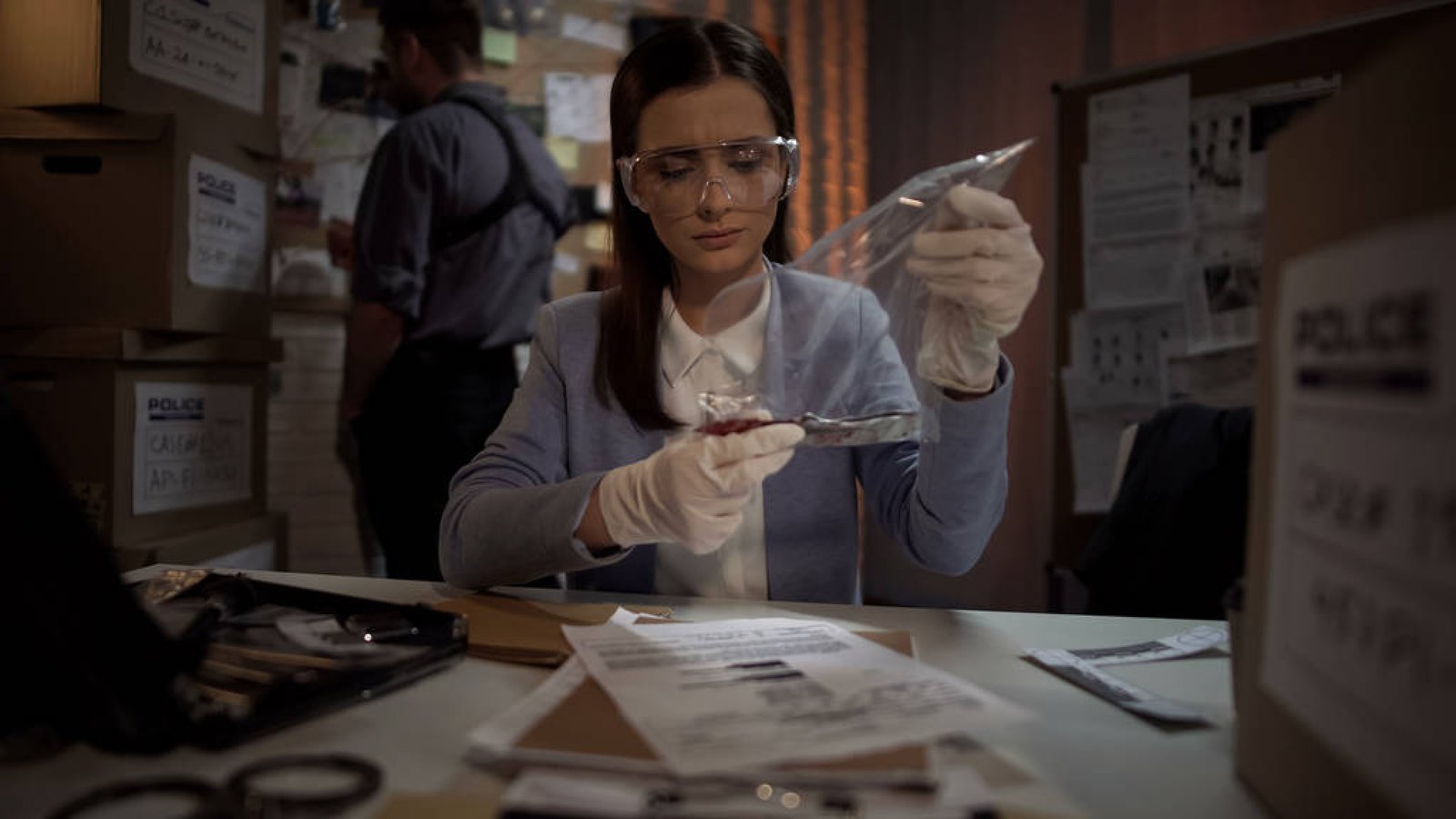
Further Forensic Support represents an agile, comprehensive forensic advisory and investigative umbrella designed to tackle unconventional, multi-jurisdictional, cold-case, and highly specialized scientific challenges that fall outside standardized casework categories. In real-world criminal justice, corporate risk mitigation, civil litigation, and personal dispute resolution, investigations rarely unfold in clean, predictable silos. Often, a single high-exposure matter—such as an alleged executive suicide involving electronic suicide notes, disputed testamentary signatures, encrypted cloud archives, and suspicious trauma marks—demands the simultaneous integration of multiple distinct forensic disciplines working in synchronized cohesion.
When conventional investigative channels reach a dead end, when initial police inquiries overlook vital physical or digital leads, or when complex legal proceedings require non-standard scientific testing protocols, Further Forensic Support provides the decisive breakthrough. Our multidisciplinary capability extends to cold-case evidence re-examination, multi-source digital artifact correlation, forensic anthropology and bone identification, trace environmental soil and mineral analysis, micro-chemical fiber characterization, voice biometrics verification, and specialized private evidentiary audits. By fusing advanced laboratory analytical instrumentation with creative, hypothesis-driven investigative methodologies, we uncover hidden physical and electronic connections that standard investigations fail to see.
Aspire Forensics delivers world-class, bespoke Further Forensic Support in Noida. Operating from our advanced laboratory and field response headquarters, our senior forensic directors, analytical chemists, digital investigators, and bio-anthropological consultants serve corporate boards, private clients, law firms, and non-governmental investigative organizations across Noida, Greater Noida, the Yamuna Expressway corridor, and nationwide.
Clients seeking the best specialized forensic support services in Noida depend on our bespoke problem-solving approach. We do not apply rigid, generic checklists; we tailor every scientific protocol directly to the unique evidential realities, physical constraints, and legal objectives of the client's case, maintaining absolute discretion and an unbroken chain of custody.
For advocates handling landmark High Court appeals, corporate crisis response teams, international tracing agencies, and families seeking closure in cold cases requiring top further forensic support services in Greater Noida, our certified practitioners deliver exhaustive scientific reviews, custom laboratory evaluations, and court-admissible forensic dossiers that illuminate complex legal matters.
Scientific Principles of Integrated Multi-Disciplinary Forensics
Specialized forensic problem-solving relies on the holistic convergence of multiple natural, physical, and computational sciences to solve complex evidentiary puzzles.
Locard’s Exchange Principle Across Physical and Digital Planes: While Edmond Locard originally conceptualized that every physical contact leaves a trace (transfers of fibers, dust, biological cells, or latent prints), modern forensic science applies this foundational truth across interconnected physical and electronic realities. When an individual enters a physical space, touches an object, connects to a local Wi-Fi router, moves past a surveillance camera, or interacts with a smart IoT device, they create synchronized physical and digital footprints. Specialized forensic support integrates physical trace evidence (e.g., shoe impressions, biological skin cells) with digital telemetry (e.g., GPS metadata, router handshake logs), establishing mutually reinforcing timelines that substantiate or refute claimed events.
Cold-Case Evidence Re-Examination Dynamics: In historical or dormant cases, technological advancements often transform previously uninformative exhibits into decisive evidence. Microscopic biological stains that yielded inconclusive results under older serological testing can now yield full DNA profiles through modern High-Sensitivity Short Tandem Repeat (STR) or Next-Generation Sequencing (NGS) technologies. Similarly, legacy analog CCTV recordings or degraded audio wiretaps can be mathematically enhanced using deconvolution algorithms and noise-reduction filters. Specialized forensic support constantly surveys advancing scientific techniques to extract fresh evidence from archived historical exhibits.
Adaptive Investigation and Laboratory Protocol
Aspire Forensics executes an adaptive, phased analytical workflow designed to navigate complex and unconventional forensic challenges:
- Complex Case Scoping & Interdisciplinary Assessment: Convening an interdisciplinary team of pathologists, digital analysts, chemists, and questioned document examiners to assess the totality of physical, biological, and electronic evidence in the case file.
- Evidence Recovery and Re-Examination Discovery: Locating, inspecting, and re-evaluating archived physical exhibits, hospital paraffin-embedded tissue blocks, preserved biological swabs, or legacy storage media under formal legal custody.
- Custom Analytical Protocol Design: Formulating non-standard, scientifically validated laboratory testing strategies—such as specialized chemical etching on scrubbed serial numbers, trace environmental soil mineralogy, or advanced spectrographic voice analysis.
- Multi-Source Data Synchronization: Harmonizing disparate physical trace evidence, digital cell-site location registers, surveillance video frames, and financial transaction timestamps onto a master chronological event matrix.
- Blind Internal Peer Review: Subjecting all non-standard analytical procedures and preliminary findings to blind peer review by senior scientists to guarantee complete objectivity and eliminate cognitive confirmation bias.
- Comprehensive Forensic Reporting: Compiling findings into an exhaustive, court-ready master dossier complete with photographic scales, spectroscopic charts, statistical match probabilities, and legal justifications.
Key Categories of Further Forensic Support
Cold-Case Re-Investigation
Applying modern DNA extraction, digital audio/video enhancement, and chemical testing to resolve dormant cases.
Environmental & Soil Forensics
Analyzing soil mineralogy, pollen grains (palynology), and chemical contaminants on footwear or tires to link suspects to crime scenes.
Audio & Voice Biometrics
Conducting spectrographic acoustic voice comparison and forensic authentication of recorded extortion, threat, or bribe calls.
Judicial Admissibility and Evidentiary Innovation
Introducing specialized or non-standard forensic scientific evidence in Indian courts requires fulfilling rigorous statutory standards under the Bharatiya Sakshya Adhiniyam. When novel scientific methodologies or interdisciplinary reconstructions are submitted to a court, judges demand proof that the technique is recognized within the scientific community, governed by standardized operational controls, and yields repeatable, verifiable outcomes.
Aspire Forensics ensures every specialized report is anchored in validated international literature and empirical data. We clearly explain the underlying physics, chemistry, or computational algorithms, presenting step-by-step diagnostic readouts that allow the court to independently verify our findings. Our certified experts deliver authoritative, transparent testimony in court, providing judges and advocates with the scientific foundation required to admit groundbreaking evidence.
Evidentiary Depletion, Sample Decay, and Physical Boundaries
The primary challenge in specialized forensic support is dealing with limited, compromised, or partially degraded evidence. Biological materials exposed to extreme heat or microbial decomposition may have their DNA fragmented beyond amplification. Similarly, magnetic media that has suffered heavy physical oxidation or chemical wipe cycles may have sectors rendered unrecoverable.
In every case, our laboratory conducts a thorough preliminary feasibility assessment before initiating destructive testing. If a sample is too degraded to yield reliable scientific results, our experts communicate these boundaries with total honesty, preventing clients from pursuing speculative or legally unviable avenues.
Frequently Asked Questions
-
1. What types of cases fall under Further Forensic Support?
This service encompasses complex, non-standard cases requiring the integration of multiple disciplines: cold-case re-investigations, acoustic voiceprint matching, environmental soil and pollen analysis, industrial espionage audits, and specialized chemical testing of unusual materials.
-
2. Can old or degraded biological evidence from cold cases still yield DNA?
Yes. Advancements in high-sensitivity PCR amplification, mini-STRs, and mitochondrial DNA (mtDNA) sequencing allow forensic laboratories to recover informative genetic profiles from degraded bones, teeth, and aged bloodstains that failed older tests decades ago.
-
3. How does voice biometric analysis work in extortion or threat call cases?
We analyze questioned audio recordings using spectrographic acoustic software, mapping vocal tract resonant frequencies (formants), pitch variations, and speech habits against reference voice samples collected under controlled conditions to determine the probability of a match.
-
4. Are custom or specialized forensic reports admissible in Indian courts?
Yes. Under the Bharatiya Sakshya Adhiniyam, expert scientific opinions derived through validated, repeatable methodologies supported by clear data and qualified expert testimony are fully admissible in criminal and civil proceedings.
