

How Forensic Experts Examine a Disputed Signature
- Document Examination
How Forensic Experts Examine a Disputed Signature
Signatures carry significant legal and financial weight. Whether on a high-stakes contract, a property deed, or a will, a signature represents an individual's personal consent and authorization. Unfortunately, forgery, simulation, and fraudulent alterations remain prevalent in civil and criminal disputes. At Aspire Forensics, our forensic document examiners employ advanced scientific methodologies to analyze handwritten signatures and determine their authenticity with unwavering precision.
Contrary to popular belief, forensic signature examination is far more detailed than a casual visual comparison. Human handwriting is a complex psychomotor habit governed by subconscious muscle memory, resulting in unique individual characteristics that are exceptionally difficult for an impostor to replicate seamlessly.
Class Characteristics Versus Individual Habits
When analyzing a disputed signature, examiners begin by looking at broad class characteristics, such as general letter formation, slant, baseline alignment, and proportional spacing. While these elements provide a baseline framework, true forensic differentiation relies heavily on identifying unique individual characteristics or "habitual peculiarities."
These subtle nuances include pen lifts, line quality, starting and ending strokes, pen pressure distribution, and microscopic tremor patterns. A forged or simulated signature often exhibits hesitation, unnatural pen stops, and careful retracing—indicators of conscious drawing rather than fluent writing muscle memory.
The Importance of Comparable Standards
An accurate forensic examination requires robust comparative material known as "standards" or exemplar signatures. Experts evaluate two primary types: requested standards (samples written by the individual specifically for the investigation) and collected standards (historical documents, checks, or legal papers signed in the ordinary course of business prior to the dispute).
By comparing the questioned signature against a broad pool of genuine exemplars across various timeframes and writing conditions, examiners account for natural variations caused by age, health, stress, or writing surface.
Microscopic and Optical Analysis
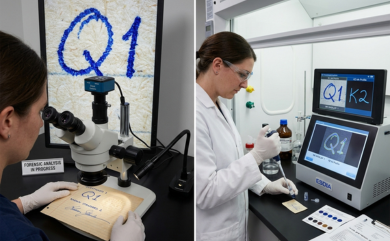
Advanced optical equipment, including stereomicroscopes and specialized lighting (infrared, ultraviolet, and oblique lighting), is utilized to examine ink layers, paper texture, and sequence of strokes. This technological depth allows forensic experts to detect alterations, tracing marks, or ink cross-over points, ensuring comprehensive and legally defensible findings.


Leave A Comments