

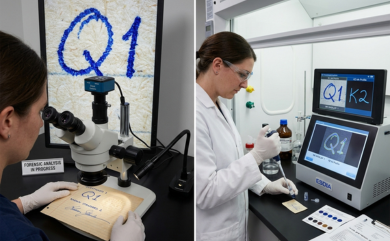
What Makes CCTV Footage Useful as Forensic Evidence
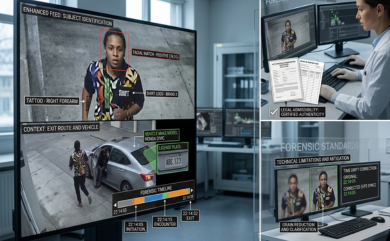
- Video Forensics
What Makes CCTV Footage Useful as Forensic Evidence
Closed-Circuit Television (CCTV) systems have become ubiquitous in modern infrastructure, providing round-the-clock surveillance for commercial establishments, public spaces, and private residences. When incidents occur, video recordings often serve as critical puzzle pieces in legal proceedings. However, raw surveillance footage alone is rarely enough; transforming raw video recordings into legally admissible forensic evidence requires rigorous scientific processing, authentication, and analysis.
At Aspire Forensics, our video forensics specialists examine surveillance media to clarify obscured details, verify authenticity, and establish precise timelines. Understanding what elevates ordinary security footage into definitive forensic evidence is essential for legal teams and investigators seeking to build a robust case.
Resolution, Frame Rates, and Clarity
The utility of CCTV footage begins with technical parameters such as spatial resolution, frame rate, and compression formats. Low-resolution cameras or aggressive video compression often obscure vital identifiers like facial features, license plates, or clothing patterns. Forensic enhancement techniques—such as uncompressed frame extraction, deinterlacing, stabilization, and algorithmic noise reduction—are frequently deployed to maximize clarity without introducing artificial artifacts.
Furthermore, maintaining the native container format and frame rate from the digital video recorder (DVR) or network video recorder (NVR) is crucial. Transcoding footage or recording a monitor screen with a handheld device severely degrades evidentiary value and can lead to challenges regarding authenticity in court.
Authentication and Integrity Verification
In an era where digital tampering and deepfakes are increasingly sophisticated, proving that video footage has not been altered or manipulated is paramount. Forensic experts perform comprehensive container and stream analysis to check for signs of editing, frame drops, or unauthorized metadata modification. Establishing a pristine chain of custody from the moment of export guarantees that the evidence presented is authentic, reliable, and trustworthy.
Chronology and Forensic Reconstruction
Beyond identifying individuals or objects, CCTV footage is instrumental in behavioral analysis and event reconstruction. By synchronizing multiple camera feeds with independent time references, forensic analysts can map out accurate spatial movements and timelines of events, providing clear, objective insights that withstand rigorous cross-examination.

Leave A Comments